Fawkes by Nadine Brandes | Review

Pages: 450

Genre: young adult fantasy

Synopsis

Thomas Fawkes is turning to stone, and the only cure to the Stone Plague is to join his father’s plot to assassinate the king of England.

Silent wars leave the most carnage. The wars that are never declared, but are carried out in dark alleys with masks and hidden knives. Wars where color power alters the natural rhythm of 17th century London. And when the king calls for peace, no one listens until he finally calls for death.
But what if death finds him first?
Keepers think the Igniters caused the plague. Igniters think the Keepers did it. But all Thomas knows is that the Stone Plague infecting his eye is spreading. And if he doesn’t do something soon, he’ll be a lifeless statue. So when his Keeper father, Guy Fawkes, invites him to join the Gunpowder Plot—claiming it will put an end to the plague—Thomas is in.
The plan: use 36 barrels of gunpowder to blow up the Igniter King.
The problem: Doing so will destroy the family of the girl Thomas loves. But backing out of the plot will send his father and the other plotters to the gallows. To save one, Thomas will lose the other.
No matter Thomas’s choice, one thing is clear: once the decision is made and the color masks have been put on, there’s no turning back

My thoughts

Rating three out of five:

I enjoyed this book for the most part, especially in the beginning as Thomas are thrown out of magic school and seeks his father Guy Fawkes to get his mask he needs to connect to a colour and get his magical abilities. As he gets dragged into the gunpowder plot to assassinate the king, we learn with him as readers, and I thought it was well-done without too heavy information dumps. Then the middle part arrived and I started to get bored, and confused.

the characters 

The interactions between Emma and Thomas lead to them both learning and one wasn’t there just for the others behalf. Emma is very determined, which I liked, and it’s obvious what kind of girl the author did not want her to be, even if she’s under the care of wealthy people and without measures to get free. We get to see a lot of Thomas’ journey in the middle part of the book, and there were some moments of clarity I really liked. Emma could show him another perspective, his father showed him the gravity of the situation and the Gunpowder plot, he himself saw the conditions “his people” the Keepers were under as they were executed. The moral dilemmas he went through really had something to say for the ending of the book and it was interesting seeing that journey he took.

That said, I had a few things that didn’t sit right with me in this book. As much as I liked Emma’s determination and strong will, it made her very predictable as a character. I’ve read other fierce female characters who avoided this, and when you know she’s going to follow, or eventually break out of other’s control, it makes her plotline very obvious. Still, her fighting people and Thomas standing there silently cheering her and being impressed was awesome. 


The author really spelled out what she wanted to include in this book, like literally on the last pages or afterword. I would not mention this had it not also been very obvious throughout the book. She wanted to show a historical fiction where a female character finds her independence, with moral dilemmas over those in power and including and raising questions around slavery and treatment of people of colour. And all that’s great, but those things had a very streamlined, straight-forward and predictable route even as the plot itself had its twists and was interesting done. It felt too one-dimensional in comparison to the rest of the book, perhaps to make sure the points were clear enough.

the stone plague

Through the whole book I realized Thomas being plagued was like a portrayal of illness/injury and how it can change identity and be an insecurity. Emma talks to him about not letting her darker skin define her, and that conversation was really good. At the same time, with the exception when he’s stabbed and plagued for the second time, he doesn’t seem to really feel it physically. Like he’s worried about people’s thoughts, obviously as it makes him a target, but he’s not in pain and when it’s mentioned how his skin turns to stone it’s more like the skin is a bit tight which sounds so unbelievable. I don’t think the author did anything wrong, it’s just one of these smaller things that doesn’t make sense to me. Let me tell you, as I’m typing this my fingers are hurting because of joint problems, you cannot have a plague turning you into stone and not be in constant pain or uncomfortable, if that’s not explicitly stated. 


the damn White Light

Then it’s White Light as a concept. I’ve read enough Sanderson books to consider it a god in this world (not that I’m comparing books here). But do you want a Light who is able to talk to and know everyone? How the hell would we have the plague in the first place if White Light could guide people like he did with Thomas? The moment I realized Thomas was supposed to have as much power as Dee who had studied it for so many years, when the Light could give him (and possibly others) its god-sized ability, that reduces the credibility drastically. It’s a known trap in fantasy, like that moment made it obvious whatever side Thomas was on would win and ruined the whole finale. Like Thomas could’ve gotten his father out of prison, definitely. The Light could have a whole army of teen boys out there doing its bidding. Also did it want the Keepers dead? I’m confused.

Everything else is so spelled out that I need an explanation to why you have a god with such powers and ability to bend others to his will basically, who knows enough about people to be witty about Emma’s determination, and it comes down to the ending this book has. The characters never questions its intention.

the ending

The ending really didn’t work personally, it was apparent that the gunpowder plot would not go down in the book either, the fact that Thomas didn’t tell his dad about Dee’s bad intention made barely sense in the beginning and the characters went out of character for the whole ending, the way I see it. Thomas could have flipped a switch and become very secure in the White Light, fine, but the rest of them … I was done.

The feeling this book gave me: intrigued, but never satisfied with a big finale or explanations

Thanks to publisher Thomas Nelson for receiving this copy through NetGalley in exchange for an honest review.

Head On by John Scalzi

Genre: Sci-fi

Pages: 335

Look at this great, minimalistic cover! It’s so perfect. Well, maybe the person should’ve been a threep (robot). 

ho

Synopsis

Hilketa is a frenetic and violent pastime where players attack each other with swords and hammers. The main goal of the game: obtain your opponent’s head and carry it through the goalposts. With flesh and bone bodies, a sport like this would be impossible. But all the players are “threeps,” robot-like bodies controlled by people with Haden’s Syndrome, so anything goes. No one gets hurt, but the brutality is real and the crowds love it.

Until a star athlete drops dead on the playing field.

Is it an accident or murder? FBI Agents and Haden-related crime investigators, Chris Shane and Leslie Vann, are called in to uncover the truth―and in doing so travel to the darker side of the fast-growing sport of Hilketa, where fortunes are made or lost, and where players and owners do whatever it takes to win, on and off the field.

My thoughts

Rating out of five:

tre

I was drawn in by the interesting plot, especially as it’s techonological development to combat illness. What I got was an fbi agent Shane discovering bodies, getting into accidents, Shane and his partner Vann trying to connect it all together and find the motives. In the middle it seems very messy, and not in a good way.

Everything is happening around the two fbi agents, mostly not caused by their actions. They are two pieces in a game where I have barely been introduced to the world, let alone who or what could be behind the murders. I can’t bring myself to care when someone dies that early on, even if it’s to kickstart the need for Shane’s investigation in this story. For the Hilketa player I was almost half into the book before I felt bad for him, with some details on how much pain he must’ve been in.

I think this would work very well as a tv series, where you get to see the threeps and Hilketa game from the start. For the most part I think so because you can watch and judge the other people in the story, try to find the murderer yourself, where here you don’t really get details on characters. The book included things like how Shane’s treated differently because he’s a Haden, both at work and in private, what being an Haden means and some of how the sport Hilketa works. But it’s a lot of information that needs to go out just for the reader to understand what the fbi agents are doing. For example that statistics in Hilketa is displayed in this one public way, and changing that can be illegal because here is the information it gives on players, so it’s a lead. Trying to do that without information dumps (which I think was well done!), along with introducing characters connected to it, and that there’s more than one murder. It’s a lot and while I found it surprisingly easy to follow, it made the investigation, and such the story, slower and less focused on characters.

This is the standalone follow-up to a book called Lock In, which I haven’t read. I would’ve like to know more about how the locked in syndrome and Haden people started out, with the development of the threeps. I looked it up and it seems like the short book Unlocked contains all the backstory, so I would like to read that too. It’s free here, and while the writing or plot doesn’t give you insight in Head On, if you’re interested it seems to be a smart 60-pages read before the other books.

I would recommend this book to people who are excited about the concept, but be aware that it’s a mix of sci-fi and fbi murder investigation. The feeling this book gave me: excitement about the sci-fi aspects with the robots and medical technology, but strange annoyance at the murder investigation.


Thank you to Tor Books for receiving a copy of this book through NetGalley in exchange for an honest review. 

Leave This Song Behind | Review

Pages: 220

Genre: poetry


Synopsis

“Leave this song behind” features the best poetry from many teen writers that has contributed to Teen Ink. The topics and styles varies widely, and all the poems are divided into seven sections based on techniques and theme. In this collection is all from simple, thought-provoking poems to longer ones that paint vivid images with their carefully selected words.

My thoughts

Rating out of five:

tre

I think there’s something a lot of “adult” poets can learn from these teenagers in that not every poem in a collection needs to be about the same thing described over and over. This collection had a lot of variation, surely because the poets behind it are so different personalities and it was nice to read through the different styles and themes. It also seemed to have made the collection especially difficult to fit together, as the subject of a poem can range from death and hospital visits to more light-hearted humor in a few pages.

It wasn’t always obvious that the writers were teenagers in the writing itself, most of them did a much better job than I could’ve and my (untrained) eyes see a lot of talent in here. But inexperience was more obvious in the subjects that were written about and, even though I’m sure I’m the same age as a lot of them, that decreased my interest some while reading.

There were some poems in here that almost made me tear up, or that communicated something to me, among a lot that didn’t. All in all, this seem like a fantastic project and I’m glad it exists to encourage young poets and creativity!

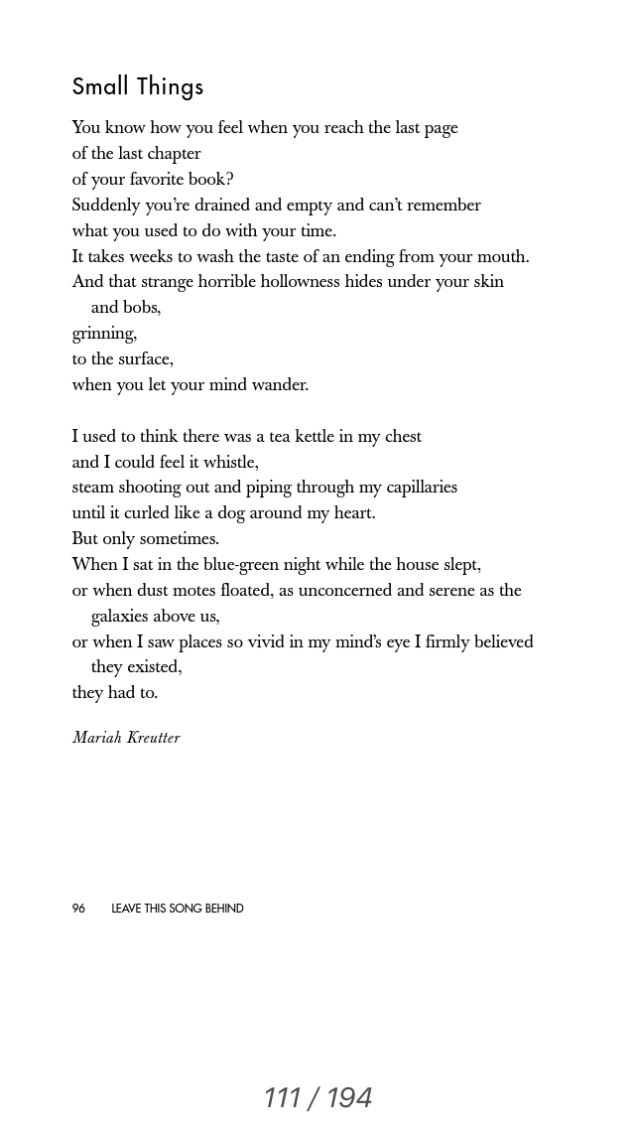
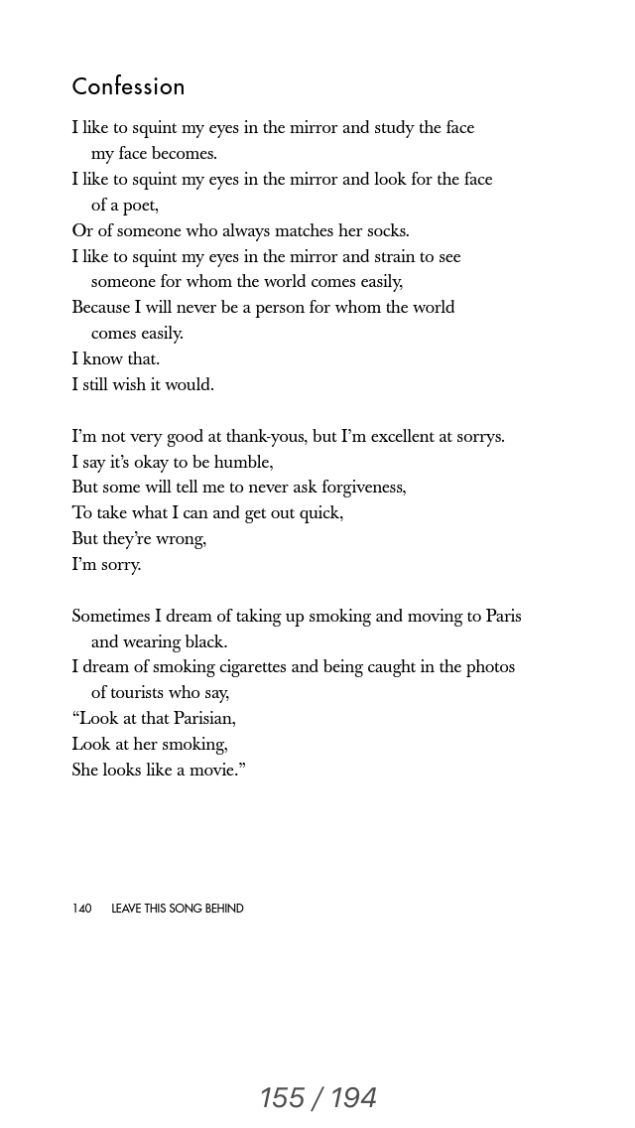
Here’s a couple example poems:

IMG_5702.JPG

IMG_5704IMG_5705

Airborn by Kenneth Oppel | Review

Pages: 550

Genre: Science fiction, steampunk

Summary

Matt Cruse is a cabin boy on the Aurora, a huge airship that sails hundreds of feet above the ocean, ferrying wealthy passengers from city to city. It is the life Matt’s always wanted; convinced he’s lighter than air, he imagines himself as buoyant as the hydrium gas that powers his ship. One night he meets a dying balloonist who speaks of beautiful creatures drifting through the skies. It is only after Matt meets the balloonist’s granddaughter that he realizes that the man’s ravings may, in fact, have been true, and that the creatures are completely real and utterly mysterious.

In a swashbuckling adventure reminiscent of Jules Verne and Robert Louis Stevenson, Kenneth Oppel, author of the best-selling Silverwing trilogy, creates an imagined world in which the air is populated by transcontinental voyagers, pirates, and beings never before dreamed of by the humans who sail the skies.


My thoughts

Rating out of five:

tre

A very good book with steampunk aspects, flying ships and creatures, not to forget the sky pirates. Of the similiar books I’ve read here and there, this is definitely the winner so far, it has it all.

– the characters – 

This is how a young adult book should be. The two main characters are Matt Cruse, the boy on the airship Aurora, and Kate, a wealthy girl who arrives on it and is very excited about the mechanics behind how it works and science in general. They’re both adventurers, in their own way, but Kate is definitely more of one.

Matt has proved his abilities on the ship multiple times with some awesome action in the beginning, but because he’s young and too poor to go to school to become captain (i don’t think that’s the right title) he has to work harder to rise in the grades on Aurora. On the other hand, Kate’s parents are not excited about their daughter’s interests in science and adventure, and she’s constantly trying to get away from her chaperone, who doesn’t think anything is fitting for a girl. They’re both treated like kids and certainly has recklessness enough at times, but still tries to overcome their situations and do better.

“She didn’t slow down. “Good point. But we mustn’t be governed by our fears, Matt Cruse. We have a duty, you and I.” “A duty?” “To science, absolutely. If there are bones on this island, we must find them.”

– the plot & action – 

The action was definitely there, having to deal with pirates turns out to create chaos. The lesser characters like Matt’s friends, the workers on board, and Vlad the cook is well made, as is the villain. In the middle of the book there was some “lost on deserted island” vibes, where the adventure certainly continued. Still, the plot is very divided into actions ten years before, before the pirates, island and after pirates. It feels like it could’ve been divided into multiple books, or maybe it was some parts that was to slow in contrast. It became obvious which parts was important to include to get a fitting ending, even if the suspense was still there. It wasn’t obvious if it would end well, like other similiar books.

– the writing – 

There was lovely long sentences, stretching over half a page sometimes. And good writing overall. Matt Cruse’s view on his life and the reasons he prefer to be on board of a flying airship was heartwarming, his father used to work on the same ship and he felt freer in the air than on land. It showed the contrast between his and Kate’s interests and personalities, and I while the ending left some of a bitter taste, it made sense.


I would recommend this book to anyone who feels interested. Here’s some more proof of the good writing:

“She nodded absently, as if pulling open drawers in her mind, searching for something.”

“At night when the sky is scalloped with clouds and the moon does a vanishing act, you fall back on instinct when looking for moving objects. Almost like looking for shadows on shadow.”

Silence Fallen by Patricia Briggs | Review

Mercy Thompson #10

Pages: 370

Genre: urban fantasy

Synopsis

Mercy Thomson is a coyote shapeshifter living among werewolves. It has been true for most of her life, but certainly now when she’s chosen an alpha werewolf as mate. In this book she’s suddenly attacked and abducted (again?) by one of the most powerful vampires in the world. Which lands her without the pack bonds, money or clothes a long way from home, in Europe, searching for allies and enemies. Also the ghosts of Prague doesn’t seem to be leaving her alone.


My thoughts

Rating out out five:

tre

Travelling is nice and expands the universe, but it also leaves the familiar, already established world and friends. With no new interesting characters being introduced, just varies of the same old, the character interactions felt flat. Might’ve been saved by learning anything new about the character’s, especially the vampires, backstories, but it wasn’t enough of that either.

The problem is that this book has been done before, in all the nine other Mercy Thomson books. Until now I felt every book has contributed something, but this book just floats on past glories and reveals. Even the plot is sentered around it, about how great Mercy is and the victories she’s done. The humble-bragging and “I’m/she’s great because” speeches made me cringe because they seemed so misplaced. Really I’m giving this book a star extra because I agree Mercy’s pretty great, but if you skip this book and go straight from book nine to eleven, I don’t think you would notice much difference. Maybe one reveal towards the end that will hopefully play out further in next books.

The only thing that made me giggle was a surprise guest, which I’ve halfway guessed wasn’t who I thought, but the reveal managed to sneak up on me anyway. Slow applause for that, I could see the hints spread throught the book afterwards.


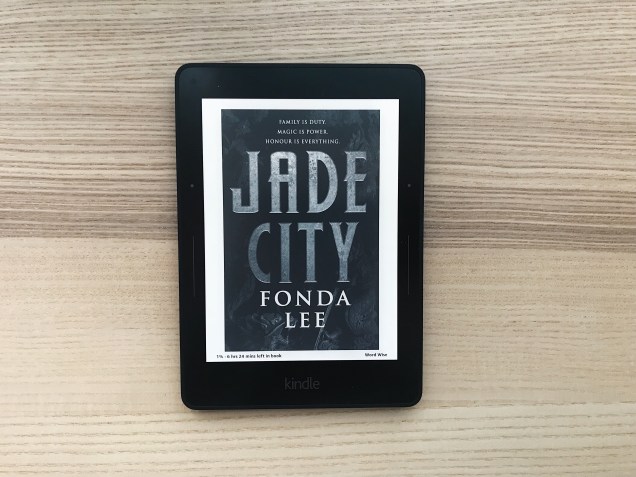
Jade City by Fonda Lee | Review

Pages: 510

Genre: urban fantasy

Synopsis


TWO CRIME FAMILIES, ONE SOURCE OF POWER: JADE.
Jade is the lifeblood of the city of Janloon – a stone that enhances a warrior’s natural strength and speed. Jade is mined, traded, stolen and killed for, controlled by the ruthless No Peak and Mountain families.
When a modern drug emerges that allows anyone – even foreigners – to wield jade, simmering tension between the two families erupts into open violence. The outcome of this clan war will determine the fate of all in the families, from their grandest patriarch to even the lowliest motorcycle runner on the streets.
Jade City is an epic tale of blood, family, honour, and of those who live and die by ancient laws in a changing world.

My thoughts

Rating out of five:

tre

– the action –

This book had a well thought through plot, a lot of action in between slower scenes and lots of crime family conflicts. The fight scenes was well-written, it reads like those of a superhero action movie. I especially noted it when someone slits the enemy’s throat from behind. Personally I’m not much a fan of fight scenes like this, I like my action to come with emotions or a lack off, written with a different perspective than just cinematic-looking decription. This is an opinion that hasn’t affected my rating of this book, because I think it’s very well done and something many readers want. It would make it easy for a movie adaption as well.

– the jade –

The concept of jade as a powersource was something new for me and made perfect sense. The mix of asian and western is something that makes this book special, it’s a big part of the plot. Just the levels of formality in the culture is a something that fits perfectly with the dynamics of the families. The crime families agree that outsiders are dangerous to invite in, to give them this drug and control of powers they didn’t understand, which leads them to a certain degree of isolation and a good scene for this internal struggle to play out.

“So it came to be, remarkably, that the ruling family of No Peak was all the family Anden had.”

– the characters – 

The story is told from multiple points of view, which was tricky. I didn’t really care for the character we started out with, there’s this kid who tries to steal jade that I didn’t feel for much. Poor circumstances made it hard for him, but he’s no evil mastermind or accidental hero. Probably going to become one in later books though, with the focus he got sometimes. There were other characters I didn’t care much for as well, which I realized is because you don’t get to see much of the internal life of them, even through their point of view.

Shae is the sister in one of the biggest crime families, and she’s returned after basically running away attending school overseas. She could’ve been such an interesting character, but her plans without jade was so ridiculous and uncertain for someone who had taken such a deliberate choice to separate her from her family. She’s too smart not to have a plan or even dreams as she returns from abroad. Multiple times I felt like her character came apart, where the way everyone described her didn’t match up with how undecisive she acted and thought about events, especially in her pov.

There should’ve been more backstory and personality quirks in a book of five hundred pages, to give readers a reason to care about Hilo’s top men and even all the major characters. I cared about Lan because he had a lot to say in how it would go down, which family would win power. Aden got some backstory and we got a quick look into how hard he was working to be best at the military school.

“Heaven help me, Shae,” he whispered into her ear. “I’m going to kill them all.”

Politics and the parts where Shae and Hilo is organizing were good. I have a weakness for characters like Hilo, who is used to violence, but has a conscience somewhere and is very protective of his family and friends, even though he’s arguing with them. Even Aden remarks that he has a remarkable way with people, but then sometimes he shows how dangerous and spontaneous he could be, which was awesome.


– in the end –

It ended on an exciting note and I think I’ll pick up the next book in the series pretty quickly when it comes out. It took a long time to build up the characters and plot, but now I have all hopes for a good series, as it was well done in many aspects.

*spoilery discussion on characters below*

Continue reading

Ilusions of Fate by Kiersten White | Review

Pages: 278
Genre: fantasy, young adult

c1e2c5c7-a898-4106-b5c9-26d676cbf411.jpg

“Perhaps if you gave the sun a bit more attention, it would be flattered and come out more often.” 

Synopsis

Jessamin has been an outcast since she moved from her island home of Melei to the dreary country of Albion. Everything changes when she meets Finn, a gorgeous, enigmatic young lord who introduces her to the secret world of Albion’s nobility, a world that has everything Jessamin doesn’t—power, money, status…and magic. But Finn has secrets of his own, dangerous secrets that the vicious Lord Downpike will do anything to possess. Unless Jessamin, armed only with her wits and her determination, can stop him.

My thoughts

tre

My feelings about this book told by the book itself: “I don’t dislike them, nor do I like them. I’ve never understood why one must love children (magical plots) because they are (have lots of all-powerful alpha men behaving like) children.” Edited that quote a bit oops, not that the original quote with children isn’t too true. Fortunately for me, Jessamin feel the same way about the guys, at least at first.

“Paths do not only go one way. We choose which direction to take. I refuse to believe that any outside forces can determine the course of my life.” 

It’s supposedly a historical fiction (with a non-existing country?), or at least it’s placed in England in another time where women didn’t have rights and especially not the biracial ones from foreign countries, who blackmailed their white rich dad to get an education (u go girl).

“He shakes his head dismissively, and I hate him for it. He has dismissed my entire life with that one gesture, whether intentional or not.”

Sometimes Jessamin seems clever and capable, making me want to laugh in glee, but mostly she’s acting even more like kid than the rich bastards involving her in their oh-so-powerful invisible magic war. Can’t even remember what the fighting was about, that’s how much the book explained it. Jessamine’s friendship with the other girl was what got me through that last part. A huge thank you to Kiersten White for not making her the typical “mean girl”.

This book is interesting and the ravens are cool and all, but it doesn’t bring much new. Perhaps if the writing had been better, or the characters less inconsistent? It handles the subjects of politics and racism pretty well, but… it lacks a certain flow and I’m sorry to say the beautiful cover doesn’t match with the story between them.


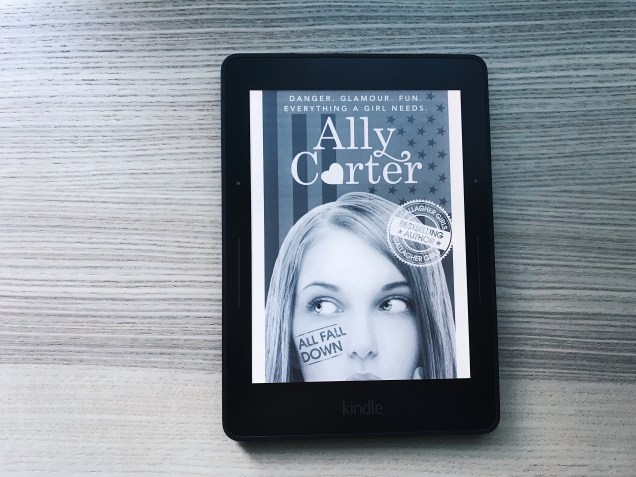
All Fall Down by Ally Carter | Review

Pages: 250

Genre: young adult – mystery

Processed with VSCO with hb2 preset

Synopsis

Grace is absolutely certain of three things:

1. She isn’t crazy. 2. Her mother was murdered. 3. Someday she’s going to find the man with the scar, and then she is going to make him pay.

My thoughts 

tre

“All Fall Down” is overall a good young adult book with lots of action, likeable and mysterious characters and plot twists. While I didn’t find it as entertaining as the Heist society, or the mysteries as well though out as those of the Gallagher girls, it’s a nice beginning of a new series by Ally Carter.

The plot gets a slow, hesitant applause from me. A girl who no one believe when she says someone killed her mother? Sure. Living at a embassy? Better. Spying? Great concept. The characters? Mixed feelings. Predictability? Halfway into the book I could guess the ending, even if I was only partly right.

The flow of the book wasn’t like it should have been either. Some places the writing got messy because suddenly a lot of action needed to happen simultaneously. It’s especially a problem towards the ending. I have read worse, but it throws you off, especially for younger readers.

“Keep your chin up. Eventually, you will meet someone who cares about your opinion. I’m so sorry I’m not her.” 

That quote describes Grace pretty well. I’ve always liked Ally Carter’s previous characters and Grace is no exception. She’s a sarcastic, brave, spontanious, witty and a paranoid person. Really, she jumps off brick walls into different countries. What is there not to like? However, she’s also troubled, in a way that added something to the story. First I thought she got panick attacks, which she does in a way, but it’s more like flashbacks. I don’t know if that was the best way to tell this story, but it works? Kind of. Something else I miss is the relationship between the characters. There are so much potential there. COME ON, they’re embassy kids. From all over the world, all different kids stuck in the same situation. The diversity, stories, cultures and friendships that could have been exchanged. But you really don’t get to hear a lot from them. Mostly it’s because Grace is stuck in her own head, which I can understand, but I feel like they haven’t got enough time together. Perhaps in the next book. Right now the other kids seem more like ghosts who follows her, but only because they’re bored.

There are also a few very cheesy elements in this book, like the fine line between peace and war. Could really this bunch of kids, actually teenagers – they just act like kids, start a war by running around? The adults seem to think so, but they don’t do anything about it. Except for those cheesy conversations and “don’t worry about it”. I’m not buying it.

I want to say I just felt a little too old for this book, but my eleven-year-old self would definitely like this book. It’s well-written in places, in others it seems unfinished. The plot is built on too many assumptions for it to feel remotely real. Teenagers, even if they act like kids, aren’t that far off from the rest of the world as this book make it seem. Especially not if they’ve grown up around dimplomats, I would believe. Still, I’ll read the next book when it comes out.

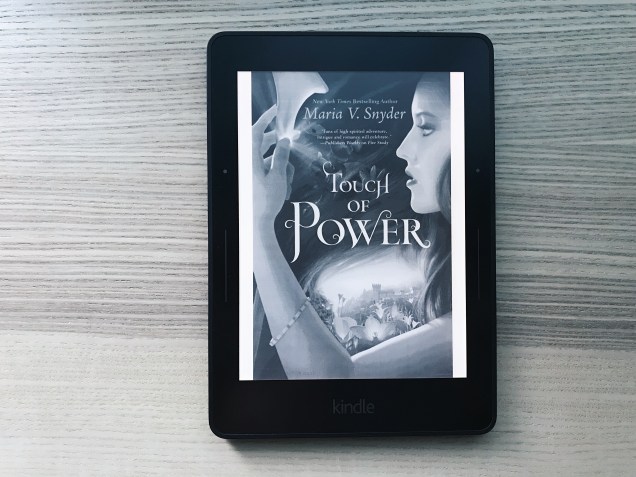
Touch of Power by Maria V. Snyder | Review

Pages: 390
Genre: young adult, fantasy

Processed with VSCO with hb2 preset

Summary

In hiding Avry struggles not to use her healing gifts and invietably she breaks. Her conscience gets the best of her, but she underestimates the villager’s fear and brutality. She ends up in the hands of a band of rogues who have other uses for her than the bounty on her head. They’re taking her to her enemy’s leader, the prince who’s frozen in the last state of the plague, to use her gifts to cure him. Only then she might die herself.

My thoughts

tre

A healer who instead on healing the wounds transfer them to herself. How can that be a bad idea (cue nervous grimaces). 

Most people seem to love this book. I have no idea why. I really liked the (Poison) Study series by Snyder and still wish to read her other series Insider and Glass. But where I found the Poison Study entertaining and original enough, this book just felt chaotic and dull. The healer idea could have been brilliant, but it wasn’t developed enough. The dilemma between where the line goes as to which people Avry should heal felt non-existent. Avry is brought up to see carrying others’ pain as normal and even her purpose.

I feel like I’ve seen this before; Here’s a kind of people who can heal, but the ignorant narrow-mided citizens see their magic as unnatural and lays the blame on them so their only hope is to run for their lives. It’s used as an almost “ironic” turn of events, but it’s just adding unecessary hate, not to talk about growing quite boring. I just read another story that fell through in the same way: Finnikin on the rock by Melina Marchetta. To quote my Finnikin review; “If only they hadn’t killed all their healers…” Who knows, maybe the healers are hiding in a cave somewhere as a twist, but I won’t read the next books to find out.

Most of the book is written around what Avry will do when she gets to the dying prince, after the (way too) long journey. But Avry is a very mild person, which isn’t a bad thing, but I never doubted for a second she wouldn’t sacrifice herself for the prince. Everything else seemed out of character. That takes away a quite bit of the suspense. And I didn’t really care if she died because things were bad for her already. Which says an awful lot about my feelings for this book. Leave the girl alone and stop using her selflessness against her or just kill her, I’m over this.

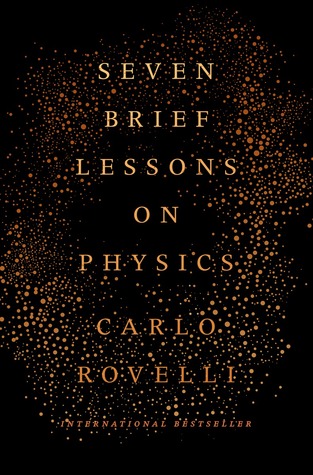
Seven Brief Lessons on Physics by Carlo Rovelli | Review

Pages: 90

Genre: science, physics

okay, I’ll admit I chose this book because of its beautiful cover. I mean look at it:

25734172

tre

In this book you get basic concepts and breakthroughs in physics described in a poetic way. It’s a short book with seven brief lessons (who would’ve guessed), well-written and focused on keeping the reader interested. At points the explanation is overly simplified, even for someone who’s about to take (basically) her first physics class, but I understand how more information might’ve destroyed the flow of the writing. It would’ve been better with footnotes (or something similiar) leading to more in-depth sources so you can actually understand the thing being explained.

The book got better the further into it I got, and lesson five on heat was perhaps the most interesting. Maybe because that was the one I knew the least about beforehand? Rovelli’s explanations was mostly good, but I was frustrated more than once at the tendency to mention a concept or name and never explain it further. I basically had wikipedia open, which I don’t feel should be this necessary.

It’s a good book for the person who’s not into physics and don’t usually think about the concepts on how tiny/big the world are and so on. It’s clear that the author knows what he’s talking about, both in the subject and the writing. Not to mention the beautiful cover and marketing. Personally the book was a nice read, but I didn’t feel I got much out of it. Made me realize I might as well open my actual physics textbook, if only I remember where I’ve buried it.