My New Favourite Book: Women in Science

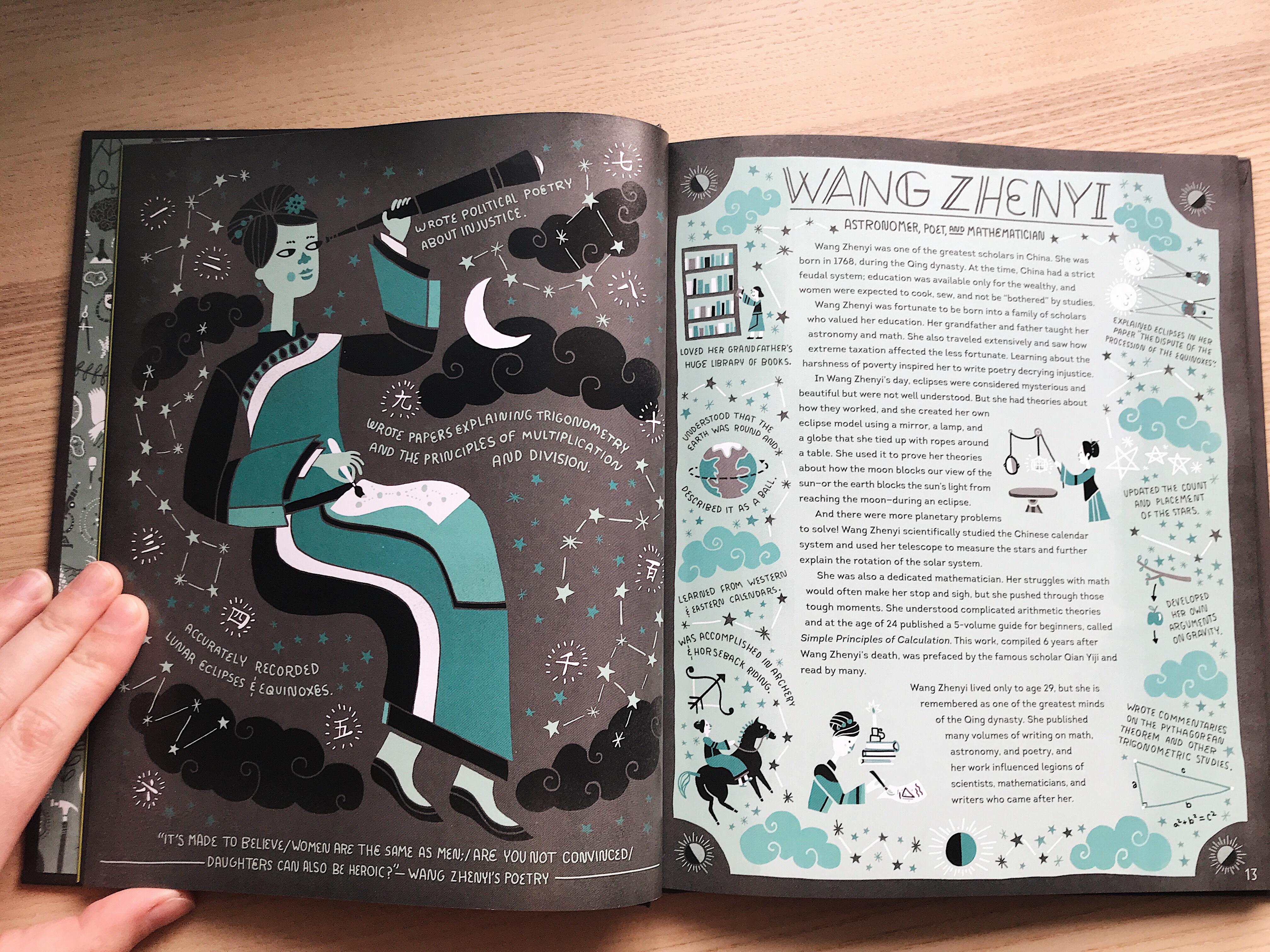
It’s Women in Science: 50 Fearless Pioneers Who Changed the World
by Rachel Ignotofsky
and it’s so gorgeous and well-done, I was smiling wide while reading the whole thing.

I LOVE THIS BOOK. I realized that the moment I laid my eyes on it because the illustrations are EVERYWHERE and adorable. I love it so much. I found this book by listening to a podcast called “Talk Nerdy” where Rachel Ignotofsky was on talking about the books and other things. She’s also created books with Women in Sports and The Wondrous Workings of Planet Earth. This book is written with kids in mind, because the writing is elegantly simple and accessible. I’m going to gift this to every kid I know, I would recommend it to everyone else as well.
Why I think encouraging girls to study science is very needed

I’m going to study science at university, but as I was growing up I’ve seen nearly just male scientists and had only male science teachers (until now). Not only that – growing up I had no female friends interested in science! What you choose as a career isn’t just based on your own interests and views, but things like who you can imagine yourself as in the future, in ways it’s difficult to control or pinpoint. I grew up in a place where people were very encouraged to follow what they were good at and make a living out of it, while where I’ve spent the last five years is more focused at getting the right degree or experience to work in one of the existing jobs. I’ve seen those different mindsets, along with economical situations of course, really make an impact on people’s choices.

I’ve never tried to shape my life after role models, but then I’ve also never had anyone I wanted to be like. This book gives so many examples of women who followed their passions and made their own path. And that’s really needed, because you want science (especially maths and physics, which is still stigma around) to be introduced as viable alternatives.
Here’s the thing that sucks: people don’t understand at even smaller levels what makes it harder to be a girl in science. It’s 2019 and I’ve heard a lot of jokes from my own physics class, every one of them individually harmless, but together they further a division. The fact is that I’m not trying to prove myself every time I step into a classroom, but that’s a choice I had to make to be able to be curious and ask questions, and something I see others are struggling with. I think it’s important to not divide scientists into “scientists and female scientists”, but mostly at a higher level, because as long as it’s not as many male and female choosing the fields, it is needed to encourage girls in different ways to cancel out those different social views that has gotten us here. One of the guys in my class was disagreeing with one of many invitations to visit a university being only for women, and I get the immediate reaction. But it shows how hard it is to make someone understand how it can affect a person growing up seeing girls staying dumb on purpose because doing well on math tests isn’t cool or likeable, or encouraged by parents really, and how it’s so hard to find other girls with shared interests.

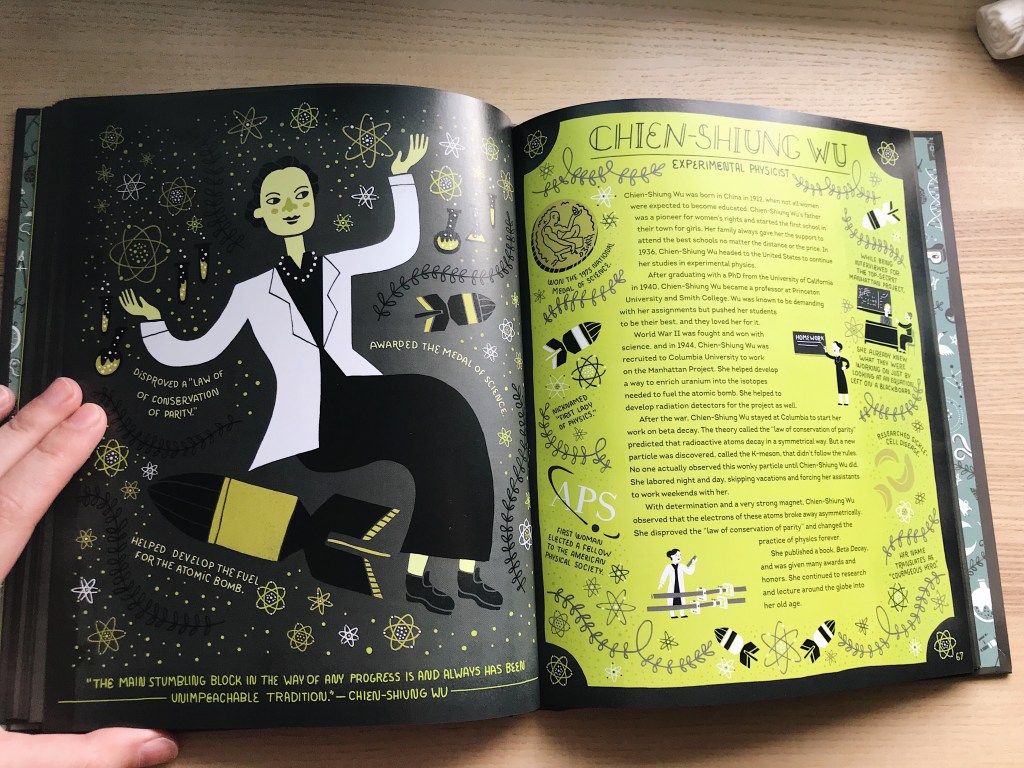
But also look at the norwegian scientist featured! I was really excited, even though it’s one of the few I already know more about in this book. To round this off- I’ve seen more initiatives to get girls/women into science fields, some of them natural, others very cringe-inducing, and really think and hope it’s getting better than it was just ten to five years ago.
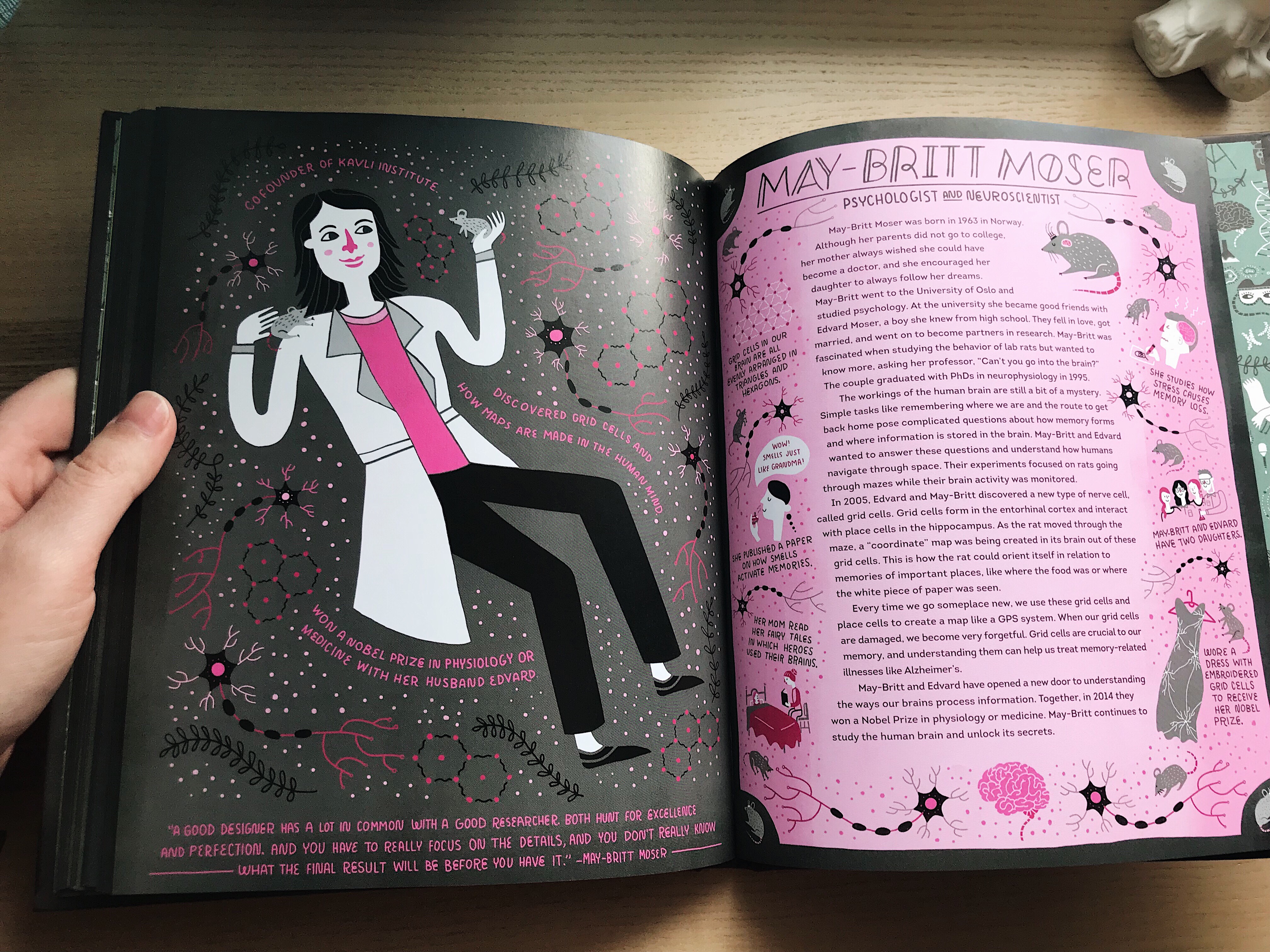
I really adore how this book shows scientists in different styles, ages and personalities.

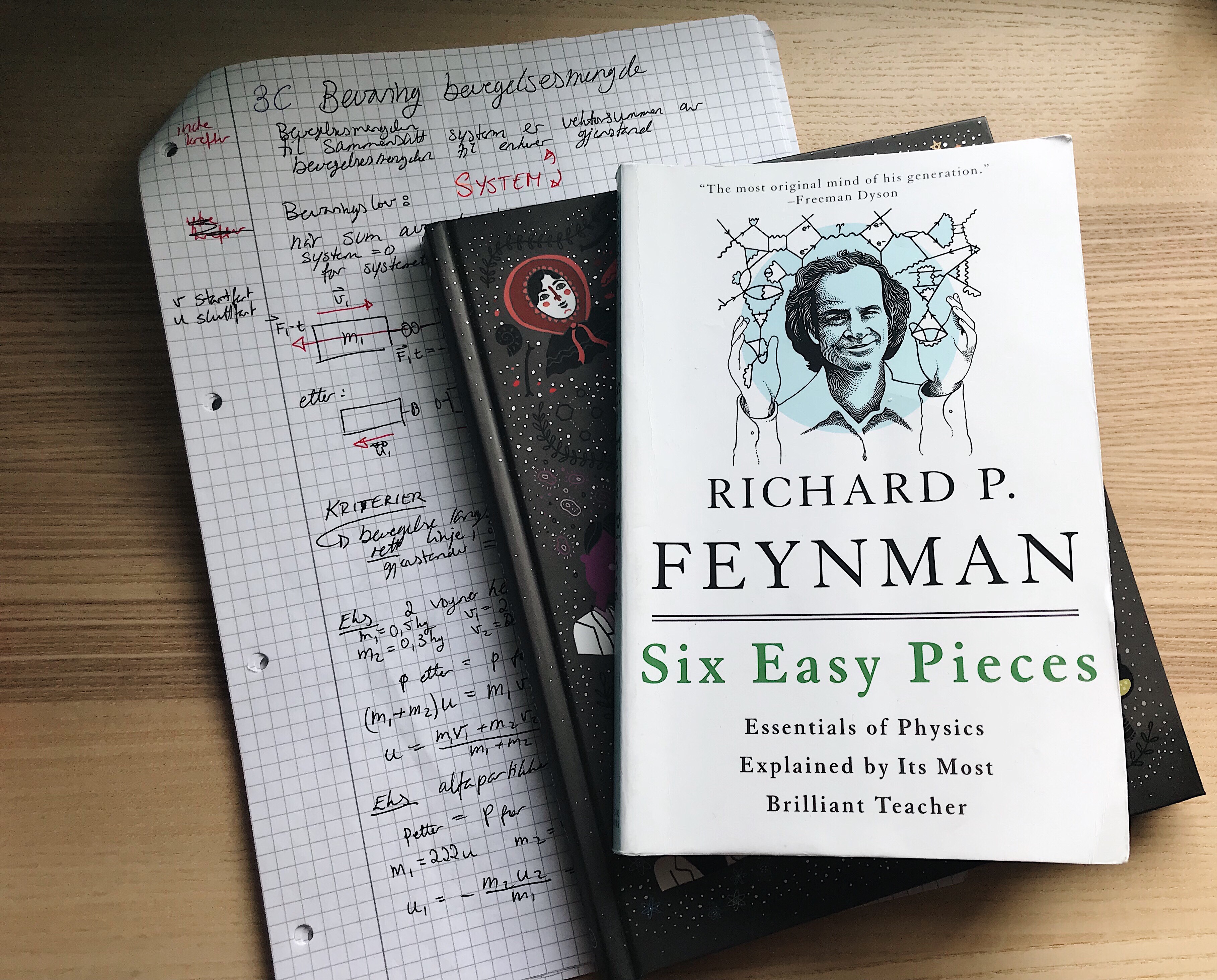
Six Easy Pieces by Richard Feynman | Book Review

Genre: physics, nonfiction

Pages: 140

About the book

Richard Feynman is a well-known physicist, he was awarded the Nobel Prize of physics in 1965 for his developments to the quantum field theory. This book isn’t lying when it claims he’s one of the most brilliant physics teachers as well, particularly well-known for this introduction series of lectures from Caltech university in 1964, that this book is based on.

My thoughts

Rating out of five: four

My background going into this book: one and a half year into physics classes. I read this book a while ago and just now decided to post the review, the day after I sent my application for a physics bachelor at university!

The only reason this isn’t getting five stars are that the lectures are older. This book was first released in 1994, it’s an abbreviated form of the 1964 Feynman Lectures, which has been edited later. I just feel as an introduction this should have more side-notes on later development (just a couple words) and where to find more information on them, because it’s meant as an introduction.

The way Feynman talks about physics de-mystifies it, and makes it accessible. As someone who is going into physics, I’ve already learnt to love formulas. They say so much in so few sentences! It’s like abreviations, but you got to have an understanding of what they mean. Feynman is so aware of this, and instead put physics concepts into words, very elegantly. I really do get why he’s so looked up to. He’s up there with Stephen Hawking, in the quality of his writing. I’ve read parts of Einstein’s biography, and while he was a incredible scientist, his lectures were known from the beginning for jumping straight to the top-level difficult problems, leaving most of his students behind. I think Feynman explains really well concepts of physics, that we look at the universe and create certain rules or theories through observations and experiments that explain what we see. But also gets into more specifics, where my favourite parts were comparing physics to other science fields, the history of finding particles that everything in the world is made of, about the strangeness of fluid physics (especially turbulent fluids, Smarter Every Day made a great video about it that I’ll link to down below) and conservation of energy as a great intro to the concept of energy that everyone hears so much about, but usually don’t understand.

What I felt reading this book: not so weird for loving physics, and that more people would if this was the type of intro they got

A great bit of info on the questions around laminar and turbulent flow (fluid physics) with some nice fontains)

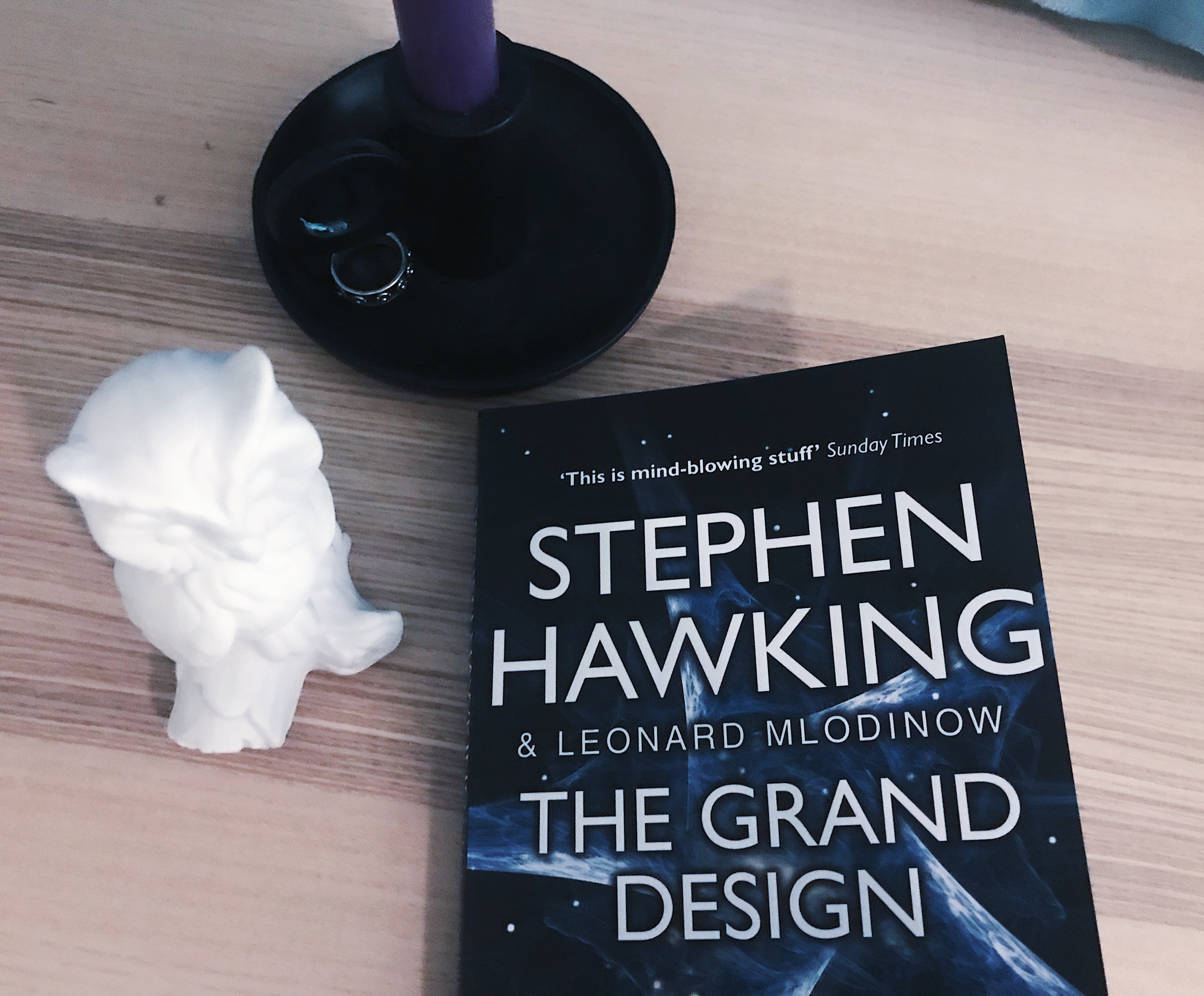
The Grand Design by Stephen Hawking | Review

Pages: 200

Genre: science – physics

Synopsis

A beautifully written book about our universe and how and why it was designed. It’s written for people of many different levels of knowledge of physics already, from short and clear explanations of atoms to mentioning a few things I personally need and want to look more into like string theory, bosons, where plancks constant comes from and Feynmans sum over histories. This is a book trying to give philisophical answers based on scientific history and theories. As the book says itself:

Why is there something rather than nothing?

Why do we exist?

Why this particular set of laws and not some other?”

My thoughts

Rating out of five: five

I’ve honestly never read a full Stephen Hawking book, even though I take physics classes and am very interested in it. I was personally really surprised at how much I understood, that I’ve gone through in classes before and this book looked more at the “why” behind it, the connection that I so much love. This is the book you need to read if you’re interested in the how and why’s of the universe, no matter what level of understanding you’re at now! 

This book absolutely made me reflect on the nature of the universe, even though I already have some experience there. It also made me so very excited about learning more, and what we could find out in the future, with newer technology. Multi-verse and possibly no objective reality existing are examples of rabbit-holes of information and theories I love to fall into, so this book was ideal.

Favourite quotes

“While concending that human behaviour is indeed determined by the laws of nature, it also seems reasonable to conclude that the outcome is determined in such a complicated way and with so many variables as to make impossible in practice to predict.”

“[…] philosopher David Hume who wrote that although we have no rational grounds for believing in an objective reality, we also have no choice but to act as if it is true.”

“Such calculations show that a change of as little as 0.5 percent in the strength of the strong nuclear force, or 4 percent in the electric force, would destroy either nearly all carbon or all oxygen in every star, and hence the possibility of life as we know it. Change those rules of our universe just a bit, and the conditions for our existence disappear!”

“If the [M-] theory is confirmed by observation, it will be the successful conclusion of a search going back more than 3.000 years. We will have found the grand design.”

Back to School: Nonfiction Books | Top Ten Tuesday

Top Ten Tuesday is hosted by That Artsy Reader Girl to bring bookish friends together. A new topic is posted each week.


Nonfiction I Like

10 Steps to Earning Awesome Grades. A must-read if you’re a student, I’m serious.

Six Easy Pieces by Richard Feynman. If you’re into physics. I’m actually currently reading this, I’ve taken it on vacation, to the beach, everywhere. It has sand stuck to it, but it was worth it.

Into the Wild by Jon Krakauer. To get a reminder of why you shouldn’t drop out of school and run live in the woods, at least without a lot of preparation (and then you might as well study). Just kidding, it’s a good story, here’s my full review.

We Have No Idea: A Guide to the Unknown Universe by Jorge Cham. Also if you’re into physics. It’s not meant to learn you as much as Six Easy Pieces, more to make you curious. A bit of humor and very nice illustrations, I’m currently reading this book as well.


Nonfiction on my TBR:


I Contain Multitudes: The Microbes Within Us and a Grander View of Life by Ed Yong. Biology, I guess. I’m very interested in microbes and our immune system because mine isn’t working properly (autoimmune disease).

The Body in Pain: The Making and Unmaking of the World by Elaine Scarry. Pain is weird, describing pain is weird, I want to learn more about it.

A Mind for Numbers: How to Excel at Math and Science by Barbara Oakley. I like math, but my frustrations overpower that interest with every test (we had a weird teacher last year, you would never know what difficulty one test would be based on the last one, or if it was in the curriculum). Trying to get that interest back, it’s difficult.

The Grand Design by Stephen Hawking. I’ve read a few physics books, but never any by Stephen Hawking (I’m cringing writing this). I had this book in my hands this summer, started to read it and then it disappeared on vacation.

Three Physics Youtube Channels I Recommend:

  • Simon Clark studies physics and had a series of vlogs from his PhD in atmospheric physics or something at Exeter Uni. Also his current profile picture makes him seem like an evil mastermind.
  • Alicedoesphysics is starting her third year in physics at Lancaster Uni and has a really good and informative channel.
  • Andrew Dotson just moved to New Mexico for to get his master in physics and has daily uploads which are great and very varied, from tips to vlogging to lectures.
  • I just realized I’m way more into physics than any other science. Huh.

My Favourite Podcasts: Science and Productivity

It’s time for my favourite kind of podcasts, science and productivity. I love listening to passionate people talking about science from a perspective you don’t get in class, with more humour. Here’s a post with the general, two-dudes-talking type podcasts I like.


– productivity –

Cortex

  • Youtuber CGP Grey and relay-founder Myke Hurley dicuss their work as independent content creators

The College Info Geek Podcast

  • A productivity podcast for students, discussing all kinds of decisions, troubles and tips students might need.


– science –

Ologies

  • Alie Ward interviews one expert in a field about what they do, and proves no questions are stupid. It makes me want to work with a new thing each episode when I hear about what these awesome people do. Personal favourites are cosmology, horology, volcanology, gizmology and mythology. Lots of ologies.

Holy Fucking Science

  • By the CrashCourse/vlogbrothers/Hank Green team
  • Four people get together with the goal to amaze each other with facts about the universe and how they found out about them. Usually lots of laughs.

No Dumb Questions

  • By youtubers Destin Sandlin and Matt Whittman
  • Science and politics and all the dumb questions

Showmakers


Do you have any podcast recommendations?

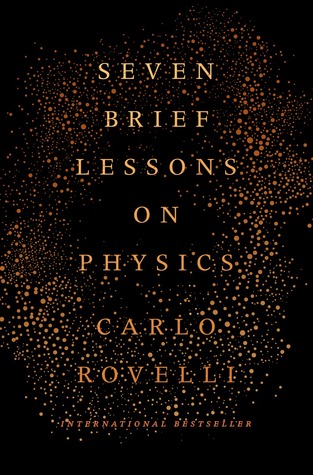
Seven Brief Lessons on Physics by Carlo Rovelli | Review

Pages: 90

Genre: science, physics

okay, I’ll admit I chose this book because of its beautiful cover. I mean look at it:

25734172

tre

In this book you get basic concepts and breakthroughs in physics described in a poetic way. It’s a short book with seven brief lessons (who would’ve guessed), well-written and focused on keeping the reader interested. At points the explanation is overly simplified, even for someone who’s about to take (basically) her first physics class, but I understand how more information might’ve destroyed the flow of the writing. It would’ve been better with footnotes (or something similiar) leading to more in-depth sources so you can actually understand the thing being explained.

The book got better the further into it I got, and lesson five on heat was perhaps the most interesting. Maybe because that was the one I knew the least about beforehand? Rovelli’s explanations was mostly good, but I was frustrated more than once at the tendency to mention a concept or name and never explain it further. I basically had wikipedia open, which I don’t feel should be this necessary.

It’s a good book for the person who’s not into physics and don’t usually think about the concepts on how tiny/big the world are and so on. It’s clear that the author knows what he’s talking about, both in the subject and the writing. Not to mention the beautiful cover and marketing. Personally the book was a nice read, but I didn’t feel I got much out of it. Made me realize I might as well open my actual physics textbook, if only I remember where I’ve buried it.