the online self with relation to time

Two years ago I wrote a post about how weird it felt to not write anything here anymore. To join the ranks of those blogs I read growing up, where the authors went off to college or otherwise got busier in their lives in the way where writing was no longer an effective creative outlet anymore. I never posted it. A small reason being how weird it is to have something exist on the internet that I haven’t looked at in years, and yet it is read daily by others.

I’ve written less than a handful reddit posts in my life, most of them asking for very specific advice that was not easily googleable. Pre chat-gpt and all*. Anyway, I googled a thing recently and my own post popped up, I only realized by recognizing the familiar writing style. Sometimes, apparently, you can have the exact same problem five years later and find internet-you reminding you of the solution.

That’s all to say I don’t know if I can stand by every opinion on every book I’ve talked about on here, yet I don’t care enough to check. It’s book reviews after all. I’ve been on the Internet since I was 11 years old, thankfully not posting anything for 99% of that time. At 26 years old, I somehow find myself returning to the same views about the world I already had many years ago. Sometimes I read journal entries and find the past me more eloquent. Teenage me spent time to figure out her world-view and communicating it to people who asked. My early twenties was all about navigating it.

Now, there’s somewhat a forced balance in social settings due to the fact that I’m busy. It sounds weird, but in past real life situations I noticed when someone was acting in bad faith and I then had to navigate that. And that’s still something I make sure to deal with if it’s about groups or people other than me. Yet these days, I don’t recognize most snide remarks meant to affect me. Sometimes I realize three days later. And I feel no shame about it, because it means I don’t feel a need to conform. Yet, there’s new factors in my life that makes me able to do that now, so it’s somewhat due to age and experience, but not all.

*I have yet to find an use for AI directly in any aspect of my life. Last week it both gave me the wrong symbol for math derivation (the only logical way to write the formula was using partial derivative, not functional derivatives, so it was a major mistake on its part) and it gave me wrong advice on yarn was of which type. Apparently due to the mistake that in English “worsted wool yarn” is both a way to spin yarn to make it smoother and a way to describe the weight of the yarn. On a related note I’ve started to learn a traditional/indigenous way of weaving bands.

I’ll admit the Dunning-Kruger effect is something I battle with every day, mostly recently in getting up from the valley of despair about everything I cannot possibly learn, also about physics as a new master student. Yet as you are exposed to just how many niche paths in your own field there is, you do realize that it is impossible to know most things. That does not mean you can not find points or facts to anchor you in your view of the world, let it be facts about nature or small advice in your daily life.

In daily life I believe whole-heartedly in the idea of collecting what is helpful and discarding the rest, be it ideology or anything else. Applied to books, this might even mean you reread something and realize new layers the story had where you did not realize before. Or that it is shit except for that one character you did adore. Lastly an update about books; I’ve picked up so few fiction books compared to physics textbooks the past years, yet non-fiction audiobooks while running errands are the best.
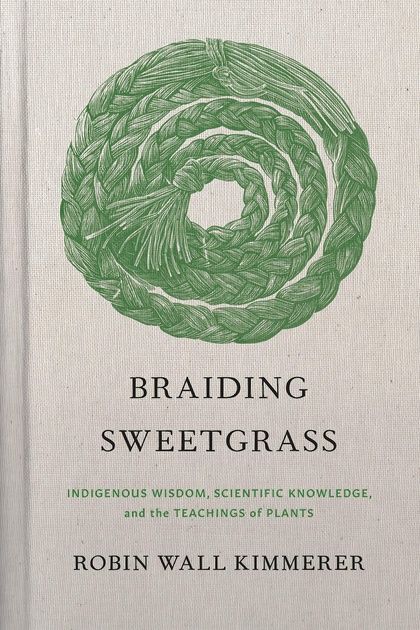
There’s one book in particular I would recommend connected to this theme. I absolutely felt I got something valuable while reading it the first time, yet I also didn’t understand it as much as I wanted to until learning more and then re-reading it. “Braiding sweetgrass: indigenous wisdom, scientific knowledge and the teachings of plants” by Robin Wall Kimmerer was recommended to me for its well-written facts about nature by a professor in the subject, yet its whole message is useful both to those new to it, those from a biology background or those who have knowledge of the indigenous in other contexts. I would write a review with how it has helped shape my view of indigenous groups connection to academic institutions and science, especially as someone who is disconnected from my own indigenous background. For now, there’s physics textbooks to read and indigenous weaving to be learned with instructions in a language that is not googleable (and how surprisingly proud I was when I found that out, that certainly has to be a choice made). Google translate both tried and failed to add the language to their translator, so I won’t even have to ponder the ethics of that.

You will find me with weaving instructions from the library, a dictionary and the right type of yarn, despite AI and Google’s current best attempts. The future isn’t coming that fast, it’s been in the works for a while.

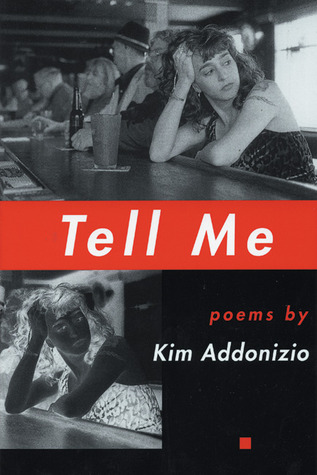
Poetry: mary oliver, addonizio, lambert | Short reviews

Shame is an ocean I swim across by Mary Lambert: contains very powerful stories by someone who is a musician as well, the writing flows very well. Talks about sexual assault, mental health and fame. Very good phrasing and descriptions of situations I can relate to as well, not that that’s a requirement. The excellence of titles like “It is time to eat something other than pizza and tequila” mixes well with the somber topics. Four out of five stars. Definitely check the trigger warnings.

Tell me by Kim Addonizio: it took me some time to both understand the poet and the work, but it grew on me the second and third time I read it. Each poem is very hit or miss for me in how interesting I find it but overall obvious that Addonizio is a good writer. It’s feministic in how it shows someone moving unrelentless through the world, while not shying away from gritty parts. Just that level of honesty Addonizio brings creates such a depth that I can’t blame her too hard when she finds it lacking in her poetry students. Very little pretentiousness to find here, very much confessional and communicating directly to the reader. Four out of five stars, I think I’ll take a dive into her other work soon.

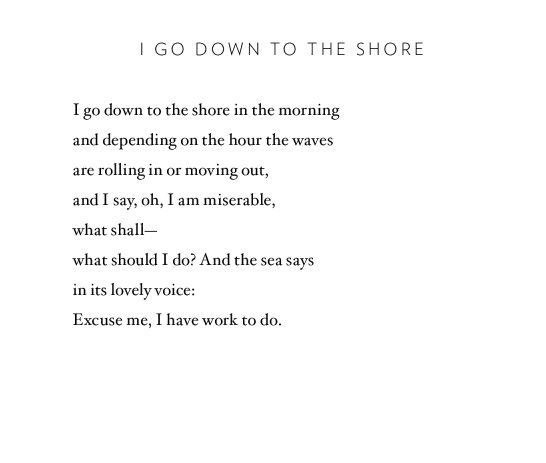
Why I wake early by Mary Oliver: I continue to find a lot of comfort and beautiful parts in Mary Oliver’s writing, even if this one wasn’t a personal favourite. In general, her poems are all about understanding humans through nature (as in the actual spending time in nature), in various ways. Usually with a bit more variety than here. Fav. poems is “The Arrowhead”; “The Snow Cricket” and “Where Does the Dance Begin, Where Does It End?”. Three our of five stars.

Fav Queer Author: Mary Oliver | #PrideLibrary20

I’m joining in on some of the #pridelibrary20 prompts, hosted by The Library Looter, Michelle Likes Things and Anniek’s Library throughout June. Here’s a link to a summary of my posts from last year.

I wanted to write a big post claiming all the reasons Mary Oliver is my favourite poet and queer author, but my body is a wreck currently and I finished exams this week and this post is going to be thrown together quickly. I have a full review of one of Oliver’s collections of poems gathered from several periods, which could be a good introduction, but is also a bit confusing without context. Personally my favourite collection and the first I read from her was “A Thousand Mornings” back in 2017. I also truly love her essay collection “Upstream”, which along with beautiful thoughts on using nature gives a bit more insight into her thought-process and background.

In ‘Upstream’ she says: “I could not be a poet without the natural world. Someone else could. But not me. For me the door to the woods is the door to the temple.” And also: “You must not ever stop being whimsical. And you must not, ever, give anyone else the responsibility for your life.” Truly words to live by!

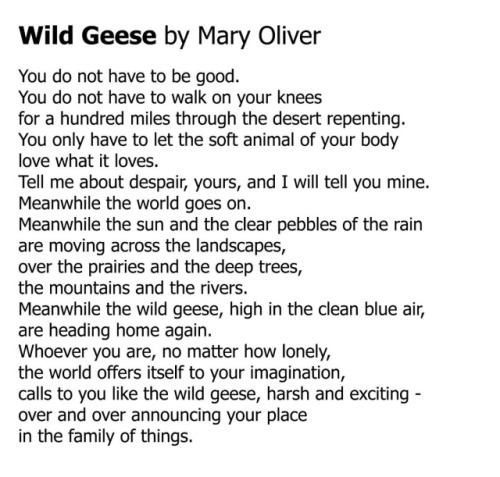
First off, I was a bit into poetry before stumbling upon Mary Oliver, but I’d never read the type of nature focused poetry that she writes. I truly fell instantly in love with it. It’s a type of romanticization that doesn’t shy away from the uncontrollable force that nature is or how it affects humans. It’s spiritual at times, but she’s also a talent at using nature and beautiful phrasing to criticize society. In my head her poetry toes a lot of these balances very-well, it’s constantly questioning intentions and morale. But it’s also very simple at times, and that’s what makes it easy poetry to fall in love with even if it’s your first poetry collection, without losing substance along with that simplicity. There’s something special about life advice from someone you know have been through difficult life events and come out on the other side, especially when she looks like the perfect grandma. She’s truly life goals, and I stand by that as someone who grew up thinking I had few role models, also because the queer component was missing.

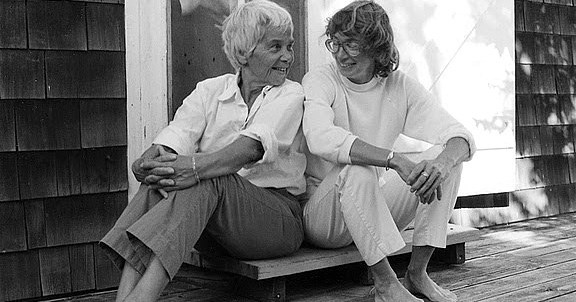
Mary Oliver went through many of the queer struggles; she was born in 1935 in suburbs of Ohio, she often went in the woods to escape a dysfunctional family and has talked briefly about experiencing sexual abuse as a child. She used writing to observe her world, but also to create one. And through it she was lucky enough to find other queer friends that would also become her family.

And after falling in love with her poetry I learned that she was an old lady! An older lesbian lady! Who had been living peacefully in nature with her female partner Molly Cook for over forty years, before she passed away. And I started crying when I heard Oliver passed away as well last year, but in the sense of someone having lived their life to completeness, even if it was a tough one.

Mary Oliver may not be very confrontative or ‘loud’ in her poetry, she’s not been extremely radicalizing or political in other means than existing as a queer person. But her story, her views and politics is definitely something you see through her poetry, it’s her medium. And I personally think it’s admirable to never lose a certain softness even as a person deals with massive trauma. But don’t mistake that as there not being a sharpness to Mary Oliver’s poetry as well.

I would suggest looking up Mary Oliver reading some on her poems on youtube and sitting down with a cup of tea or coffee, preferably staring out a window, and listen to her calm reassuring voice. You need good time for it, not in length, but in attention. Even if I also sometimes play them to relax if I can’t sleep.

A Woman in the Polar Night by Christiane Ritter | Book Review

A new book on the list of all-time favourites.

Genre: nonfiction, memoir, travel to the Arctic

Pages: 224

Synopsis

In 1934, the painter Christiane Ritter leaves her comfortable life in Austria and travels to the remote Arctic island of Spitsbergen, to spend a year there with her husband. She thinks it will be a relaxing trip, a chance to “read thick books in the remote quiet and, not least, sleep to my heart’s content”, but when Christiane arrives she is shocked to realize that they are to live in a tiny ramshackle hut on the shores of a lonely fjord, hundreds of miles from the nearest settlement, battling the elements every day, just to survive.

At first, Christiane is horrified by the freezing cold, the bleak landscape the lack of equipment and supplies… But as time passes, after encounters with bears and seals, long treks over the ice and months on end of perpetual night, she finds herself falling in love with the Arctic’s harsh, otherworldly beauty, gaining a great sense of inner peace and a new appreciation for the sanctity of life.

This rediscovered classic memoir tells the incredible tale of a woman defying society’s expectations to find freedom and peace in the adventure of a lifetime. 

My thoughts

Rating out of five: five stars

Reading this book was an experience, one that made me actually want to take a trip further north than Norway, to experience the Arctic for myself. Which sounds both dumb and unrealistic, but truly read this book if you want to understand why.

This book is special because of many reasons. It’s a memoir from 1934 by a german woman, the painter Christiane Ritter. Her husband has already fallen in love with the Arctic, and she decided to uproot her comfortable and rich life and see what it’s all about herself. He warns her about how isolated it really is, but it’s almost as if he’s forgotten the big change from normal city life already, becoming used to having to fend for himself, to have no one to turn to when the hut gets covered in snow, and travelling great distances to search for a better stove to cook on.

It’s obvious that it’s written in another time from Christiane Ritter’s position in life, but the emotion she conveys through very sparce wording was really breathtaking. I know enough about the cold emptiness of certain landscapes that I felt I could recognize it, and the feelings the vastness brings after you get over its overwhelming fear of isolation.

Everyone should give this book a chance, it won’t be for everyone’s taste, but it earns its place among my favourite books of all time because of its uniqueness. Why did I feel like this contains lessons in writing as well. I really wanted to add some quotes, but I left the beautiful book filled with markings at home by the university, and as its closed for now, this will have to do.

My feelings reading this book: fear on Christiane’s behalf, then impressed & mindblown. I really loved the third person with them most of the time, the Norwegian, who Christiane talks about the strange customs of. He represented my norwegian heart too well.

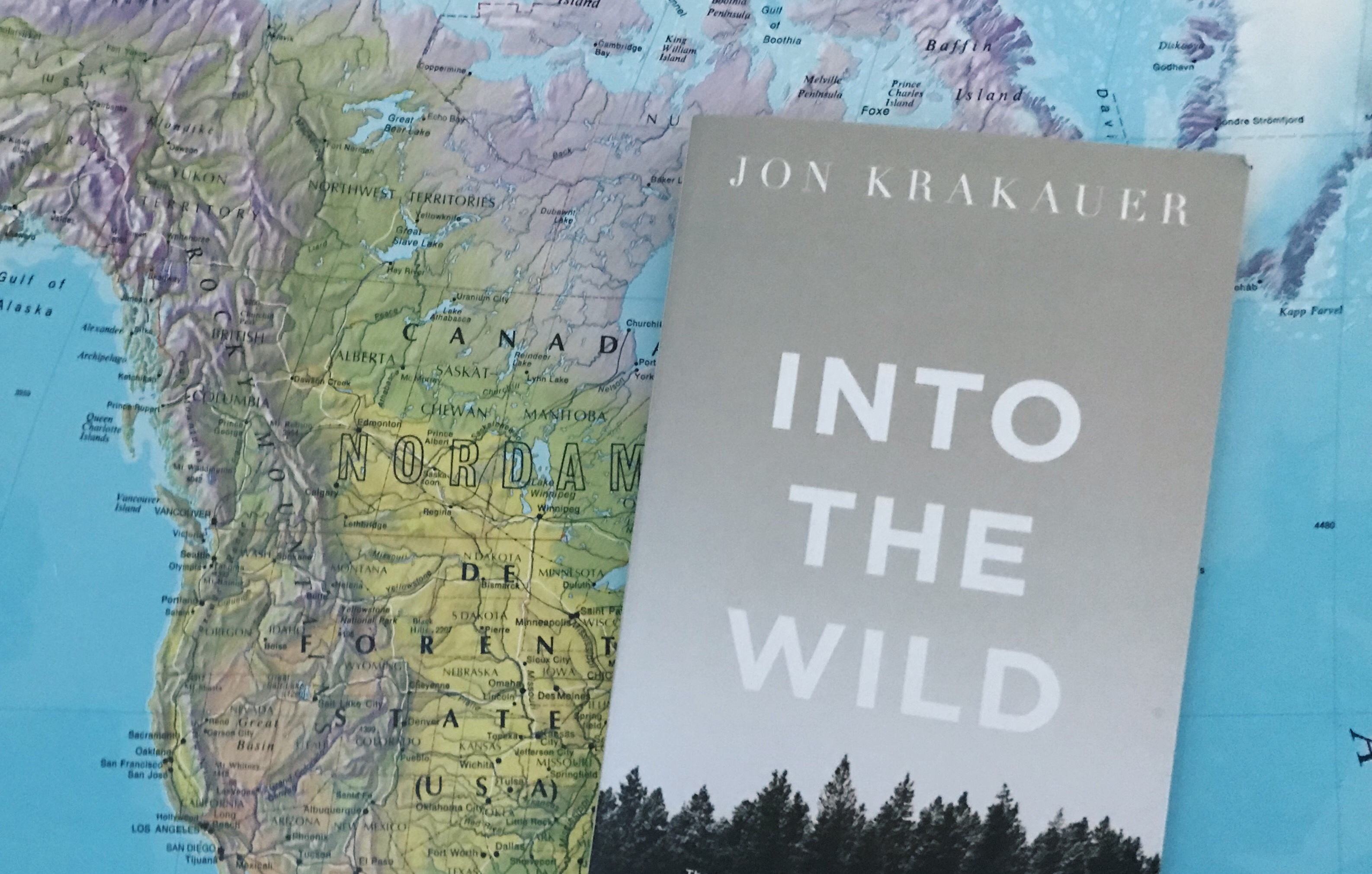
Into the Wild by Jon Krakauer

Synopsis

What does it take for a well-off young man to donate all his money and wander into the Alaskan wilderness (north of Mt. McKinley) with minimal equipment prepared? August of 1992 his body was found, four months later. After the author wrote an article on him, he chose to continue investigating what had happened and who Christopher McCandless was. It leads to this book about the events leading up to the event, how McCandless took the name Alexander Supertramp and it wasn’t his first trip alone. He had gone to Mexico and back in a kayak and wandered the US for years, meeting people who mostly got a good impression of him. It’s strange how he affected certain people, even if it’s looked at with the lense of his death becoming a nation-wide story. Alexander himself wrote about his months in the wilderness and took picture of the place, he underlined thoughtful philosophical quotes in books like anyone. But not everyone meets such an unfortunate end all alone, after having eaten something toxic or simply starving to death.

“I read somewhere… how important it is in life not necessarily to be strong, but to feel strong… to measure yourself at least once.”

My thoughts

to

I didn’t get as much out of this book as I was looking for. Mostly because it’s not Alexander/Christophers story. Obviously, since he’s ufortunately dead. His notes was the most interesting part of this book, along with the interviews of the people who met him. The author adds other similiar stories, some more interesting than others, as well as own experiences. It comes in an odd place that makes it seem more like filler than if it had been towards the end, as an extra information. There’s not enough material to justify the length of the book, which makes the middle part more boring than necessary. Other than that, the authors writing was good. There’s no romanticizing the events that occurred, but at the same time there’s given reasons for why people choose to live solitary, off the grid that way or want to be in the wilderness.

who was this person?

Personally I don’t agree with the voices claiming Christopher to have a death-wish, had overly romaticized the trip or that he’s a hero for doing something so daring and breaking out of the average life. There certainly seems to be elements of all three, he was too unprepared in the end, he seemed to be escaping and he seemed to be spontaneous. He’d already travelled a lot and been on the road, so he wasn’t straight out from normalcy and college. The last person who saw Christopher alive warned him about the dangers as he noticed he didn’t have much gear, even gave him some, but figured he wouldn’t stay out there that long. This is the part of the story where I question how in his right mind Christopher was, and what his plans were originally. But even with this there wasn’t one personality trait or fault that automatically lead to his death. He got unlucky, in the end. I think that’s the main idea I’ve gotten from this book that I wouldn’t have from articles that claim he was one thing or another. People have done stupid shit and survived, even in the wilderness of Alaska, but McCandless got unlucky.

I wonder if Christopher would’ve liked the book himself. Maybe not. I wanted to know what lead to him wanting to spend time alone out there, as well as what went wrong, and could’ve liked a more direct layout of the theories when it became obvious there were no final answer. I would recommend the book if you’re very interested, if not I think articles online or even the wiki page would be a great place to start. I haven’t yet seen the movie “into the wild”, but I’ll keep you updated when I do. I’m expecting that to give a much more “McCandless as a daring hero” vibe than this book, but maybe not.

Have you ever wanted to spend time alone in the wilderness? Can you imagine what would lead a person to do what McCandless did? I’m still wondering why he changed his name, any ideas?