The Future by Neil Hilborn | Review

Genre: poetry

Pages: 100

Rating out of five stars:

fire

I’ve long wanted to read Neil Hilborn’s first collection of poems “Our Numbered Days” after first watching his slam poems or spoken word pieces a few years ago. I was taken with how honest and passionate he seemed like, often talking about mental illness, being diagnosed with OCD and bipolar disorder. This second collection of poems contains much of the same subjects, as Neil draws from his everyday life.

From the first poem “How do you sleep with an IV in?” I was completely here for it. I started reading this book while I was in the hospital with a lot of pain, perhaps not on accident as I knew Neil would talk about his own struggles and I needed something to connect with. I’ve read this book again afterwards, to be sure I liked it and was surprised by how much I marked and highlighted passages. Here’s the first sentences of “How do you sleep with an IV in?”:

It’s just for dehydration, the nurse

says. She hangs up this alien bladder

full of fluid so clear that it couldn’t

possibly be from anywhere but space.

The poems are often looking forward, as the title “The Future” might give away. But it looks forward by talking about the past. It wonders what would happen if this one thing was different. It’s about people, about journeys, about love (of course), about being on the road. Overall I find myself really liking Neil’s voice, how he thinks and his phrasing and that’s overall what holds on to me more than the subject of the poems.

Now I tried to pick out a part of a poem, to give examples of how good they are. But my favourites are a couple pages long and you need to read the whole thing to fully get it, so just trust me and get the book, thanks. 

Favourite poems (for now): “How do you sleep with an IV in?”, “LAKE”, “I’m back, not for good”, “Blood in my sock”, “As much wind as possible”, “psalm 12, in which the author alienate his audience”, “The Future” – this one deserves an extra note as I was highlighting whole pages, Neil talks about his brain and suicide, about why he haven’t killed himself yet. He describes killing himself as a “glowing exit sign at a show that’s never been quite bad enough to make me want to leave”. There’s lots of reasons and ways people are suicidal, so many I don’t yet know and of course poems like this doesn’t give you that complete understanding, but they’re an important step in seeing other’s experiences. It feels good to see thoughts like these expressed so well on a page.

Did I forgot to mention I love the poem titles? For those who feel like poems are difficult or lack self-irony, Neil Hilborn’s poems are the oposite of that. I would completely recommend this collection and I wish him all the best. I’m going to read “Our Numbered Days” soon.


Thanks for receiving this copy through NetGalley in exchange for an honest review.

Fawkes by Nadine Brandes | Review

Pages: 450

Genre: young adult fantasy

Synopsis

Thomas Fawkes is turning to stone, and the only cure to the Stone Plague is to join his father’s plot to assassinate the king of England.

Silent wars leave the most carnage. The wars that are never declared, but are carried out in dark alleys with masks and hidden knives. Wars where color power alters the natural rhythm of 17th century London. And when the king calls for peace, no one listens until he finally calls for death.
But what if death finds him first?
Keepers think the Igniters caused the plague. Igniters think the Keepers did it. But all Thomas knows is that the Stone Plague infecting his eye is spreading. And if he doesn’t do something soon, he’ll be a lifeless statue. So when his Keeper father, Guy Fawkes, invites him to join the Gunpowder Plot—claiming it will put an end to the plague—Thomas is in.
The plan: use 36 barrels of gunpowder to blow up the Igniter King.
The problem: Doing so will destroy the family of the girl Thomas loves. But backing out of the plot will send his father and the other plotters to the gallows. To save one, Thomas will lose the other.
No matter Thomas’s choice, one thing is clear: once the decision is made and the color masks have been put on, there’s no turning back

My thoughts

Rating three out of five:

I enjoyed this book for the most part, especially in the beginning as Thomas are thrown out of magic school and seeks his father Guy Fawkes to get his mask he needs to connect to a colour and get his magical abilities. As he gets dragged into the gunpowder plot to assassinate the king, we learn with him as readers, and I thought it was well-done without too heavy information dumps. Then the middle part arrived and I started to get bored, and confused.

the characters 

The interactions between Emma and Thomas lead to them both learning and one wasn’t there just for the others behalf. Emma is very determined, which I liked, and it’s obvious what kind of girl the author did not want her to be, even if she’s under the care of wealthy people and without measures to get free. We get to see a lot of Thomas’ journey in the middle part of the book, and there were some moments of clarity I really liked. Emma could show him another perspective, his father showed him the gravity of the situation and the Gunpowder plot, he himself saw the conditions “his people” the Keepers were under as they were executed. The moral dilemmas he went through really had something to say for the ending of the book and it was interesting seeing that journey he took.

That said, I had a few things that didn’t sit right with me in this book. As much as I liked Emma’s determination and strong will, it made her very predictable as a character. I’ve read other fierce female characters who avoided this, and when you know she’s going to follow, or eventually break out of other’s control, it makes her plotline very obvious. Still, her fighting people and Thomas standing there silently cheering her and being impressed was awesome. 


The author really spelled out what she wanted to include in this book, like literally on the last pages or afterword. I would not mention this had it not also been very obvious throughout the book. She wanted to show a historical fiction where a female character finds her independence, with moral dilemmas over those in power and including and raising questions around slavery and treatment of people of colour. And all that’s great, but those things had a very streamlined, straight-forward and predictable route even as the plot itself had its twists and was interesting done. It felt too one-dimensional in comparison to the rest of the book, perhaps to make sure the points were clear enough.

the stone plague

Through the whole book I realized Thomas being plagued was like a portrayal of illness/injury and how it can change identity and be an insecurity. Emma talks to him about not letting her darker skin define her, and that conversation was really good. At the same time, with the exception when he’s stabbed and plagued for the second time, he doesn’t seem to really feel it physically. Like he’s worried about people’s thoughts, obviously as it makes him a target, but he’s not in pain and when it’s mentioned how his skin turns to stone it’s more like the skin is a bit tight which sounds so unbelievable. I don’t think the author did anything wrong, it’s just one of these smaller things that doesn’t make sense to me. Let me tell you, as I’m typing this my fingers are hurting because of joint problems, you cannot have a plague turning you into stone and not be in constant pain or uncomfortable, if that’s not explicitly stated. 


the damn White Light

Then it’s White Light as a concept. I’ve read enough Sanderson books to consider it a god in this world (not that I’m comparing books here). But do you want a Light who is able to talk to and know everyone? How the hell would we have the plague in the first place if White Light could guide people like he did with Thomas? The moment I realized Thomas was supposed to have as much power as Dee who had studied it for so many years, when the Light could give him (and possibly others) its god-sized ability, that reduces the credibility drastically. It’s a known trap in fantasy, like that moment made it obvious whatever side Thomas was on would win and ruined the whole finale. Like Thomas could’ve gotten his father out of prison, definitely. The Light could have a whole army of teen boys out there doing its bidding. Also did it want the Keepers dead? I’m confused.

Everything else is so spelled out that I need an explanation to why you have a god with such powers and ability to bend others to his will basically, who knows enough about people to be witty about Emma’s determination, and it comes down to the ending this book has. The characters never questions its intention.

the ending

The ending really didn’t work personally, it was apparent that the gunpowder plot would not go down in the book either, the fact that Thomas didn’t tell his dad about Dee’s bad intention made barely sense in the beginning and the characters went out of character for the whole ending, the way I see it. Thomas could have flipped a switch and become very secure in the White Light, fine, but the rest of them … I was done.

The feeling this book gave me: intrigued, but never satisfied with a big finale or explanations

Thanks to publisher Thomas Nelson for receiving this copy through NetGalley in exchange for an honest review.

Space Opera by Catherynne M. Valente | Review

Genre: sci-fi & humor

Pages: 350

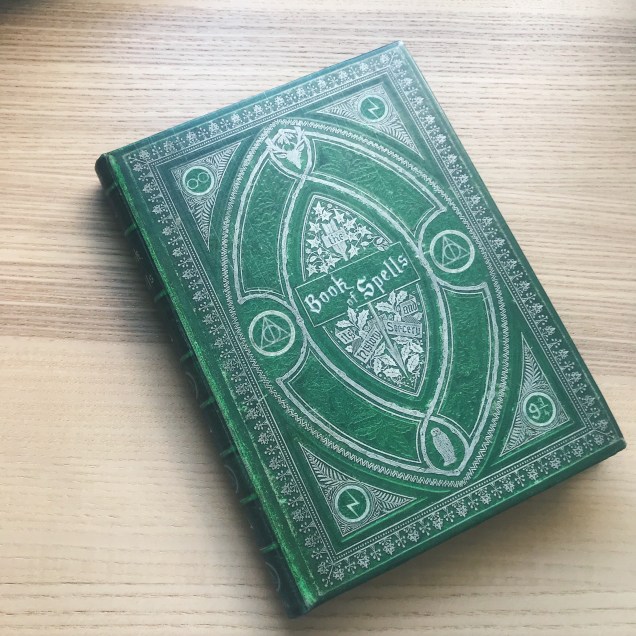
First off I finally got a kindle cover! It’s slytherin green!

Synopsis

Turns out, humans aren’t the only sentient creature in the universe and they’ve come to realize that. The people of other planets are questioning if the humans are even sentient. They’re going to have to prove it, through a contest. After a war that nearly tore the galaxy apart the other planets went together and created an intergalactic song contest, because song is what the universe is made of obviously. The “new” planets is obligated to join. But if they lose they have proven they’re not worth keeping around, so they will be eliminated completely, the species along with the planet. Humans doesn’t even get to choose their contestants, it’s the one hit then forgotten band Absolute Zeroes who has been chosen to represent Earth among these murderous aliens, musical geniuses or divas.

My thoughts

Rating four out of five:

fire

I was confused about was going on most of the time, could not keep the aliens or even human characters apart, thought one of the main characters was a man instead of a woman for most of the book (turns out it wasn’t the bromance i thought) and have to admit that the writing is an aquired taste, perhaps for the crazy and adventorous. But I was blown away by this book and how entertaining it was, a type of book that I’ve been looking for a long time. It’s all over the place and funny, with some morals here and there if you’re looking closely and parts to analyze. Everything seems just thrown in, and I love the style. It did certainly become better after the first twentyfive percent so hang in there if you’re confused. 

First tip when reading this book: do not try to understand everything on the first read through! You will use forever, the writing won’t flow and you’ll be frustrated. Just let go and enjoy the ride, especially if english isn’t your first language and so many weird words than usual, in so many strange settings throw you off. Which leads to tip number two: read this book in your first language, if possible. It will be difficult to follow anyway, from someone who has read almost exclusively english books the last seven years.

This book was marketed as this crazy, colorful, intergalactic Eurovision song contest with the name of Metagalactic Grand Prix. If you’ve ever seen eurovision and enjoyed it, this book might be for you, especially if it’s the drama, costumes and stage show that is entertaining. Because that’s what some of the aliens live for, which is so funny. Some just kill each other or others, which is why they got the contest, to “unite” aka keep an eye on each other. Politics is wonderful in these kinds of things. There were so many times I wondered if the author Valente was drawing parallells to reality and social commentary, but I could not stop reading every time, so I guess I’ll have to go back and reflect a bit more. I like her writing from other books, which was what drew me to this one, but I could not imagine the creativity and originality I would find.

On the other side there’s another marketing thing I think went wrong for this book; comparing it so obviously to “the hitchhiker’s galaxy”. Valente says herself that it wouldn’t have been made without it in a way I loved: “Without Hitchhiker’s Guide, this book would simply disappear in a puff of logic. Good lord, without Hitchhiker’s Guide, I would disappear in a puff of logic.” But it sets an expectation for a format she doesn’t have, which I think mainly is the reason for bad or average ratings I’ve seen. You need to go into this book willing to be confused and entertained.

For some of this book I feel like the hilarious, sarcastic cat who found herself on a spaceship, away from earth:

“Thus, for her, the voyage passed by like a training montage in a hastily made feel-bad film, in bits and flits and pieces the feline found it far too much work to understand or care about.”

The humor in this book is definitely my cup of tea … of coffee? “But you’ve just never had better coffee than the fair-trade organic late-harvest darkest of dark roasts at a Voorpret espresso bar. And you don’t nuke that sort of thing from orbit. It’s just so hard to find a good cappuccino when you’re traveling.”  The humor is dark, and often packaged in pretty words or situations. I love when the song contest is on and the contestants are plotting against each other.

The feeling this book gave me: being a confused tiny creature laughing out loud at how the book reflects so many parts of life and irony in the darkest things, how the erratic writing style match my brain a lot (but might be even more extra)


Here’s some parts I love, I mean watch out for spoilers,but if these won’t get you to read the book, it might not be for you:

“Mainly because the original Flus had broken off from the collective consciousness ages back, conquered everything he could get his blades on, and replaced the local gene pool with his own personal microbrew, so not only were they a hive mind, but they were all clones as well, and Muntun was, in point of fact, Planet Hitler, 100 percent populated with telepathically linked, genetically identical, sociopathic knifeasaurus dictators.” 

“Oh, I had a fantastic time talking to the depressive socialist moonbeam. After fifteen minutes, I actually asked it to kill me, but I was informed that would be nonunion work. Then Capo tried to eat it, which did not go well. Did you know my new best friend is trying to put four wee moonshines through university on a tradesman’s wage? It’s a daily struggle.”
 
“Life is beautiful and life is stupid. As long as you keep that in mind, and never give more weight to one than the other, the history of the galaxy, the history of a planet, the history of a person is a simple tune with lyrics flashed on-screen and a helpful, friendly bouncing disco ball of glittering, occasionally peaceful light to help you follow along. Cue the music. Cue the dancers. Cue tomorrow.”

Edgedancer by Brandon Sanderson| Review

Stormlight #2.5

Pages: 270

Genre: Epic Fantasy

Synopsis

Lift has appeared a few times in the first two Stormlight books, but here you get an entire story around her. From how she saved the prince, to seeing more of how she is able to use her awesomeness, Lift being hunted and hunting the Darkness and trying to find out if she wants to take on responsibilities.


My thoughts

Rating out of five:

fire

I read this fairly quickly and thoroughly enjoyed it. I just picked this book up because I wanted to start Oathbringer and saw many recommendations to read this first. Lift’s story was a really positive surprise, as there wasn’t much focus on her in the first two Stormlight books I didn’t realize her childish personality had such a context and background. She’s smart, in ways I recognize from Mistborn’s Vin and that helps to take her seriously. I really liked her as a character and am looking forward to finding out her place in Oatbringer and why Sanderson seemed it necessary to tell this story. Not that I’m complaining as it’s a good one!

The story itself managed to surprise me a couple times. Like I suspected certain people to be more than appeared, which Sanderson always does in these books, but not in the ways that mattered in the end. I especially like how the whole self-discovery of Lift is well-done, without being very obvious about it as she’s running away (again), handling a new city and plotting her way through every crisis. There’s no better way to get to know characters personalities than through their interactions with others and a few moral dilemmas.

It had started to consume her. If she’d stayed, how long would it have been before she wasn’t Lift anymore? How long until she’d have been gobbled up, another girl left in her place? Similar face, but at the same time all new?

Also Wyndle is absoloutly adorable, even if he seems pretty annoying to have to deal with all the time. I love the dynamic talking with Voidbringers or other daemons/magical animals brings. In every book, but this one in particular, Sanderson writes with such a playfullness that I sometimes think he’s mocking us all and it’s wonderful.

I would recommend reading this book if you’ve started the Stormlight Archive and is interested! I read it between the second and third book, as seems to be right. A tips is to get the “Arcanum Unbounded” by Sanderson as it contains Edgedancer and other Cosmere short stories by Sanderson, for about the same price.

The feelings this book gave me: pure glee and grinding my teeth in fear of Lift getting caught at every corner, warm feelings for this world and all the personalities in it.


favourite quotes *spoilers*

“I want control,” she said, opening her eyes. “Not like a king or anything. I just want to be able to control it, a little. My life. I don’t want to get shoved around, by people or by fate or whatever. I just . . . I want it to be me who chooses.”

“I will listen,” Lift shouted, “to those who have been ignored!”


When Breath Becomes Air by Paul Kalanithi | Review

Pages: 210

Genre: memoir


Synopsis

The author, Paul Kalanithi, was diagnosed with terminal lung cancer after just compling his education to become a neurosurgeon. In this memoir he talks about how difficult it was to go from the surgeon to a patient, how he needed to face his own mortality and death and not would be able to have the long career and life he planned for with his wife. He died in March 2015, while finishing this book and it’s an unforgettable story with wisdom, life perspectives, struggles, love and uncertianties.

My thoughts

Rating out of five:

fem

While reading this book I was on the verge of crying all the time. I started reading it in an airport bus, which was not a good idea as I nearly cried there, on the plane and going into a new city. It was and awesome experience though, to take part and learn of Paul’s last time and his perspectives and reflections not only on his terminal illness, but on his education and choices until then. It was so many details and experiences from the many years he was a medicine student, one of the best to become a neurosurgeon at that.

I’ve spent some time in hospitals unfortunately, and it was very interesting to get one doctor’s viewpoint. He said himself how his thoughts changed on patient and the whole process as he became the patient himself, the uncertainties for the future and how a human often has to make the most difficult choices of their lives in those doctor offices. Paul gives his story, but he also is a people-watcher and gives detailed decriptions of how he had to be considerate of different personalities when he had to tell them of a brain-tumor or needing surgery, which I found really interesting.

Paul considered being an author as he was an avid reader and writer when he was younger, and his talent becomes obvious in this book. It’s so well-written, a thing I never expected, along with the interesting thoughts he has. Well worth the read just for the writing, when his story is the most amazing part. In many ways this book was about life choices, which all obviously become more serious when having a terminal diagnosis.

The feeling this book gave me: I was sad at how unpredictable and horrible life can be, especially as I can sympatize too much with watching your body fall apart as you become sick. But mostly I was actually just interested and curious. It’s a book about life as much as it’s about death. I’m so happy for this book’s succeess, it deserves it all and would really recommend it.


Children of Blood and Bone by Tomi Adeyemi | Review

Pages: 540

Genre: fantasy

Synopsis

Zélie Adebola remembers when the soil of Orïsha hummed with magic, when her mother was alive and powerful enough to summon souls. It was all taken away from her when the king one night suceeded in making magic disappear. That began the horrible mistreatment of maji people, where magic-users like Zélie’s mother were murdered. Zélie is determined to bring hope and magic to her people again. She gets some unexpected company of a princess running away from the castle and needs to go against a prince under the king’s orders, trying to get rid of magic for good.  


My thoughts

Rating out of five:

fire

Children of blood and bone, what a fitting and heartbreaking title. The story is clearly connected to current events and murders of black youth in USA. As I read I was making the connections to current events around refugees and murders of black youth in the US, and in the afterword the author clearly states that as her intention. Full applause for making it clear, there’s no hinting or possibility for misinterpertation here. The way magic is intertwined with ethnicity and racism in this book is also something I’ve rarely seen before and makes this work as an excellent fantasy book as well.

the few things i didn’t like

It was a bit typical that there’s one moon left before magic disappears forever, so all the events need to happen quickly which leaves little time to develop abilities. Very convenient for the storytelling, but a choice that doesn’t match the excellence of the rest of the book. Another thing I did not like was how the plot is furthered so much by group settling down with new friends, being attacked, a lot of people killed, which leads to guilt and some drama, before it all starts over. It’s not unormal in fantasy journey books and it’s done well, but it made the book more predictable.

the characters

I never started trusting prince Inan and after finishing the book I still don’t. Every time the brother Tzain makes his distrust of him and frustration of Zélie clear I’m cheering, even though he gets annoying at times. Zélie is a character I can fall in love with. I didn’t quite get there in this book, but so excited for her development in sequels. Amari, Inan’s sister and the princess, grew on me and the author really played with and twisted the stereotype of naive princess’ first time in the big world. I especially liked her story and the tension between her and her brother, where they struggled to separate what was their awful actions and what was them being controlled by a very abusive father (the king).

A thing that for a while seemed like could bridge the differences in views, experiences and politics between Zélie and prince Inan was seeing into each others feelings. I liked how it didn’t fix everything, it didn’t create instantly understanding or world-peace, but it’s laid out as the first step that everyone need to take. Magic simply made it easier for these two (I still am curious to know why).

“In that moment I realize how wrong I’ve truly been. It doesn’t matter if I’m in her head. I’ll never understand all her pain.”

Also can you blame me for not trusting Inan’s slick talk –

“With that desire, everything becomes clear. It all begins to make sense. We don’t need to fear magic. We only need each other.”

The feeling this book gave me: I couldn’t put it down and ended up reading long into the night. It’s definitely entertaining, but more importantly is how it talks about conflicts between different ethnicities, how both sides have done wrong, but only one is very visibly enslaved. This book contains a lot of good thoughts and ideas, my concern is that the young adult label won’t make it reach audiences that needs it the most. The title is so fitting in the point it makes that children from all the groups are the same, but at the same time one group has had much more of their blood spilled and that has detrimental results. If you want to give a, not so political as maybe humanitarian message, through fantasy this is the way to do it.

favourite quotes

“You know how to win,” she says. “Just make sure you know when to fight.”

Now chaos surrounds me, pulsing through every breath and heartbeat. It sings as blood splatters through the air, screams as boats explode into oblivion.

Wolf by Wolf by Ryan Graudin | Review

Genre: historical fiction, magical realism

Pages: 390

“She’d already lost her face. She could not let the rest of herself (however dark, however broken) slip away. So she traced and she named. She hurt and she raged. She remembered.”

Synopsis

It’s 1956, Hitler has taken over Japan. Yael was put in a death camp as a five year old girl, experimented on and instead of dying like so many others, her looks went from dark to fair. And then she got more magical abilities, which helped her escape. Years later she’s on her own when she runs into the resistance. She competes in a motor cycle race through Asia in honour of Hitler, trying to get close enough to assassinate him. She gets the spot pretending to be another girl, which gets tricky as both her brother and ex-boyfriend shows up.

My thoughts

Rating out of five:

fire

I might’ve bought and started reading this book by mistaking it for another. Never regretted it, I wouldn’t normally pick up a book like this, but it was an amazing read. It’s a weird plot, but it was done so well. I loved the moto race, I loved the characters and how magic is braided into a “historical” event and war crimes.

The girl Yael is pretending to be really was fierce and would do anything to win, something she needs to learn to be if she’s going to complete her goals. It makes an interesting conflict to see her struggling to deal with how far she’s willing to change, what limit she has to cross to no longer feel like herself. How she interacts with the brother and ex-boyfriend (maybe?) puts another level of difficulty on both the plot and writing and it was done really well. The times in the death camp is just heartbreaking, as she watches everyone she loves dying and leaving her all alone. Seeing Yael have small moments of fun even on her journey for revenge means something.

I completely recommend this book to anyone that’s interested, it was entertaining, sad as well as thought-provoking read at times.

favourite quotes

“Live? In a world of fangs and lonely? Or die. In a cage of smoke and needles.”

“Her self-reflection was no reflection at all. It was a shattered mirror. Something she had to piece together, over and over again. Memory by memory. Loss by loss. Wolf by wolf. It was easy—too easy—to pretend. To fill that empty space inside her with other lives. Bernice Vogt. Mina Jager. Adele Wolfe. Girls who never had to face the smoke or watch the syringes slide under their skin. Girls who never had to stare into the eyes of the Angel of Death. Again and again and again. It was too easy to get lost. This was why, every night before she fell asleep, she peeled back her sleeve, traced the wolves, and said their names. Because somewhere in there—in those fragments of gone souls and memories—was Yael. Not chemicals, but essence. The real Yael.” 

“Toasts 7:00 – Dinner 8:00 – Dancing 8:15 – Murder 8:16 – Escape Of course, the final two hadn’t been on the list, but that was where they fit in the timetable.”

Head On by John Scalzi

Genre: Sci-fi

Pages: 335

Look at this great, minimalistic cover! It’s so perfect. Well, maybe the person should’ve been a threep (robot). 

ho

Synopsis

Hilketa is a frenetic and violent pastime where players attack each other with swords and hammers. The main goal of the game: obtain your opponent’s head and carry it through the goalposts. With flesh and bone bodies, a sport like this would be impossible. But all the players are “threeps,” robot-like bodies controlled by people with Haden’s Syndrome, so anything goes. No one gets hurt, but the brutality is real and the crowds love it.

Until a star athlete drops dead on the playing field.

Is it an accident or murder? FBI Agents and Haden-related crime investigators, Chris Shane and Leslie Vann, are called in to uncover the truth―and in doing so travel to the darker side of the fast-growing sport of Hilketa, where fortunes are made or lost, and where players and owners do whatever it takes to win, on and off the field.

My thoughts

Rating out of five:

tre

I was drawn in by the interesting plot, especially as it’s techonological development to combat illness. What I got was an fbi agent Shane discovering bodies, getting into accidents, Shane and his partner Vann trying to connect it all together and find the motives. In the middle it seems very messy, and not in a good way.

Everything is happening around the two fbi agents, mostly not caused by their actions. They are two pieces in a game where I have barely been introduced to the world, let alone who or what could be behind the murders. I can’t bring myself to care when someone dies that early on, even if it’s to kickstart the need for Shane’s investigation in this story. For the Hilketa player I was almost half into the book before I felt bad for him, with some details on how much pain he must’ve been in.

I think this would work very well as a tv series, where you get to see the threeps and Hilketa game from the start. For the most part I think so because you can watch and judge the other people in the story, try to find the murderer yourself, where here you don’t really get details on characters. The book included things like how Shane’s treated differently because he’s a Haden, both at work and in private, what being an Haden means and some of how the sport Hilketa works. But it’s a lot of information that needs to go out just for the reader to understand what the fbi agents are doing. For example that statistics in Hilketa is displayed in this one public way, and changing that can be illegal because here is the information it gives on players, so it’s a lead. Trying to do that without information dumps (which I think was well done!), along with introducing characters connected to it, and that there’s more than one murder. It’s a lot and while I found it surprisingly easy to follow, it made the investigation, and such the story, slower and less focused on characters.

This is the standalone follow-up to a book called Lock In, which I haven’t read. I would’ve like to know more about how the locked in syndrome and Haden people started out, with the development of the threeps. I looked it up and it seems like the short book Unlocked contains all the backstory, so I would like to read that too. It’s free here, and while the writing or plot doesn’t give you insight in Head On, if you’re interested it seems to be a smart 60-pages read before the other books.

I would recommend this book to people who are excited about the concept, but be aware that it’s a mix of sci-fi and fbi murder investigation. The feeling this book gave me: excitement about the sci-fi aspects with the robots and medical technology, but strange annoyance at the murder investigation.


Thank you to Tor Books for receiving a copy of this book through NetGalley in exchange for an honest review. 

Secrets for the Mad by dodie | Audiobook Review


Genre: memoir 

Rating out of five stars:

fire

who is dodie?

Dodie Clark, often just dodie, is a musician and youtuber I follow. Her music is lovely and relatable, her honesty refreshing and she makes videos on topics like mental health and depersonalization, bisexuality and just being a young adult.

the audiobook

I wasn’t rushing to read this book when it was released, which is why I only got to it now. It didn’t feel like a book I needed to read from what I gathered, but it got good reviews and when I found the audiobook I was sold. dodie’s voice is lovely and calms me, which is weird to admit. Her phrasing of thoughts is good as well.

The audiobook is great! I highly recommend to listen to memoirs this way, especially if the author is narrating it like this one, and you like their voice. It’s the person telling their story, with all the emotion they have about it visible. 10/10 audiobook, especially as some chapters include songs that fits with the times and ideas she’s talking about. It was my favourite parts and reminded me why I love her music. Also it was nice that all her friends voiced their parts in the audiobook, giving another perspective on dodie’s life.

what it’s about

The book felt aimed at teenage girls especially, as dodie takes a lot from her own experiences and those she is told from fans. The first chapter, one I really liked, is about how she was writing and a girl found her, told dodie her story of struggles and anxiety and dodie gave some advice, shared some experiences. I think that’s very transferrable to the content of the rest of the book.

I loved the song-parts and when she described them. I realize that I’m more interested in how she thinks about the world as a young adult in the business she’s in, something I get through her youtube videos and songs. In many ways this feels like a book that is written too soon, but at the same time it might be people out there that really needs it, if only for the idea that everything, every situation is temporary, much more temporary than it feels when you’re fourteen and not in control of your daily life. And for that alone I’m glad this book exist and is out there spreading that message.

Comparing this book to other memoirs I’ve read, it has a lot less to say and less new information or personal experiences to share, because dodie is already an online personality. Lately, after the book was published, she’s openly questioned how much to share, but I feel it’s a real thing in this book as well. She doesn’t seem to pour herself into it, like her music lyrics. But it fulfills the role of comforting and giving advice to young people, along with other smaller things like giving a bit of backstories to songs or times in dodie’s life. It’s a book that I expect is important for certain people, which is why I give it a good rating, but I didn’t personally gain a lot from it. It could also be that I felt like she was telling a story I in many ways already know, between having followed her casually and having been a teenage girl. 

Born a Crime by Trevor Noah | Audiobook Review


Genre: memoir


My thoughts

Rating out of five: 

fem

the audiobook

It’s the best kind of audiobook (in my opinion), where the author narrates the memoir he wrote. Trevor has the perfect voice for these things already, and the emotion, power or softness he brings really brings out each element of the book. Would definitely recommend the audiobook, as well as the story.


the story


Trevor Noah is known as a comic and host of The Daily Show, born and grown up in South-Africa before also getting big in USA.

Every detail in here is fascinating. I’ve watched Trevor on tv occassionally, I knew the bare minimum about him growing up in South Africa and being a kid of mixed race when that was illegal under apartheid. In this book I also got to know about everything from how complex South-Africa is considering all the different groups of people who lives there, with eleven (!!!) official languages, to how his relationship with his amazing and strict mom was when he grew up. There’s so many stories he tells, some funny, some heartbreaking, most either both or a place in between. Among all of this is some sturdy thoughts on change in society and how he views the world and people.

“We tell people to follow their dreams, but you can only dream of what you can imagine, and, depending on where you come from, your imagination can be quite limited.”

Trevor speaks six languages. That and his ability to be a chameleon in social settings is some of the qualities that led to his success, as he talks about in here. Also religion seem to be out to kill him, as the many trips to church with his mom sometimes ended in kidnappings and catastrophies. I applaud the way these stories are told, with the seriousness they need and a lot of humor. I’m a bit unnerved by how Trevor manages to tell some stories so calmly, and still sound perfectly honest and genuine. That’s a skill or a mindset I still can’t tell where comes from.

The ending is heartwrenching and filled with tension, but then he takes it all around to his mom’s belief again and I was crying. There’s some things in this book that most would see as too unrealistic if it were fiction, including his step-father nearly killing his mom. I don’t know what to say to this other than it felt like a book that someone had poured their truth and soul into, and I honestly encourage everyone to read it. Most articles I’ve seen of this book talks about how Trevor was in jail for a week, but it’s the “smaller” things it’s worth it for. Like how he acquired a cd burner and started a dj business, and what that meant. Or how his mom didn’t let risks derail what she did in her life.

“People love to say, “Give a man a fish, and he’ll eat for a day. Teach a man to fish, and he’ll eat for a lifetime.” What they don’t say is, “And it would be nice if you gave him a fishing rod.” That’s the part of the analogy that’s missing.”