the online self with relation to time

Two years ago I wrote a post about how weird it felt to not write anything here anymore. To join the ranks of those blogs I read growing up, where the authors went off to college or otherwise got busier in their lives in the way where writing was no longer an effective creative outlet anymore. I never posted it. A small reason being how weird it is to have something exist on the internet that I haven’t looked at in years, and yet it is read daily by others.

I’ve written less than a handful reddit posts in my life, most of them asking for very specific advice that was not easily googleable. Pre chat-gpt and all*. Anyway, I googled a thing recently and my own post popped up, I only realized by recognizing the familiar writing style. Sometimes, apparently, you can have the exact same problem five years later and find internet-you reminding you of the solution.

That’s all to say I don’t know if I can stand by every opinion on every book I’ve talked about on here, yet I don’t care enough to check. It’s book reviews after all. I’ve been on the Internet since I was 11 years old, thankfully not posting anything for 99% of that time. At 26 years old, I somehow find myself returning to the same views about the world I already had many years ago. Sometimes I read journal entries and find the past me more eloquent. Teenage me spent time to figure out her world-view and communicating it to people who asked. My early twenties was all about navigating it.

Now, there’s somewhat a forced balance in social settings due to the fact that I’m busy. It sounds weird, but in past real life situations I noticed when someone was acting in bad faith and I then had to navigate that. And that’s still something I make sure to deal with if it’s about groups or people other than me. Yet these days, I don’t recognize most snide remarks meant to affect me. Sometimes I realize three days later. And I feel no shame about it, because it means I don’t feel a need to conform. Yet, there’s new factors in my life that makes me able to do that now, so it’s somewhat due to age and experience, but not all.

*I have yet to find an use for AI directly in any aspect of my life. Last week it both gave me the wrong symbol for math derivation (the only logical way to write the formula was using partial derivative, not functional derivatives, so it was a major mistake on its part) and it gave me wrong advice on yarn was of which type. Apparently due to the mistake that in English “worsted wool yarn” is both a way to spin yarn to make it smoother and a way to describe the weight of the yarn. On a related note I’ve started to learn a traditional/indigenous way of weaving bands.

I’ll admit the Dunning-Kruger effect is something I battle with every day, mostly recently in getting up from the valley of despair about everything I cannot possibly learn, also about physics as a new master student. Yet as you are exposed to just how many niche paths in your own field there is, you do realize that it is impossible to know most things. That does not mean you can not find points or facts to anchor you in your view of the world, let it be facts about nature or small advice in your daily life.

In daily life I believe whole-heartedly in the idea of collecting what is helpful and discarding the rest, be it ideology or anything else. Applied to books, this might even mean you reread something and realize new layers the story had where you did not realize before. Or that it is shit except for that one character you did adore. Lastly an update about books; I’ve picked up so few fiction books compared to physics textbooks the past years, yet non-fiction audiobooks while running errands are the best.
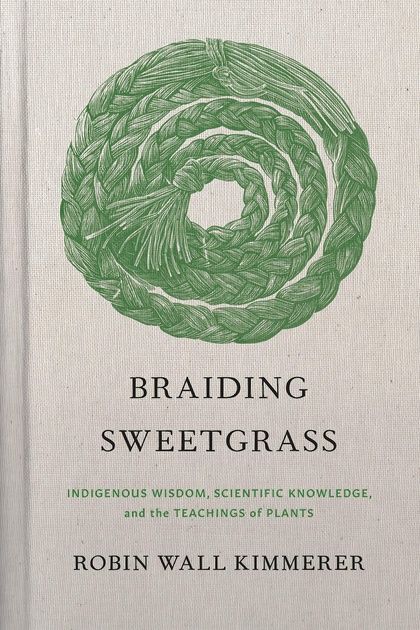
There’s one book in particular I would recommend connected to this theme. I absolutely felt I got something valuable while reading it the first time, yet I also didn’t understand it as much as I wanted to until learning more and then re-reading it. “Braiding sweetgrass: indigenous wisdom, scientific knowledge and the teachings of plants” by Robin Wall Kimmerer was recommended to me for its well-written facts about nature by a professor in the subject, yet its whole message is useful both to those new to it, those from a biology background or those who have knowledge of the indigenous in other contexts. I would write a review with how it has helped shape my view of indigenous groups connection to academic institutions and science, especially as someone who is disconnected from my own indigenous background. For now, there’s physics textbooks to read and indigenous weaving to be learned with instructions in a language that is not googleable (and how surprisingly proud I was when I found that out, that certainly has to be a choice made). Google translate both tried and failed to add the language to their translator, so I won’t even have to ponder the ethics of that.

You will find me with weaving instructions from the library, a dictionary and the right type of yarn, despite AI and Google’s current best attempts. The future isn’t coming that fast, it’s been in the works for a while.
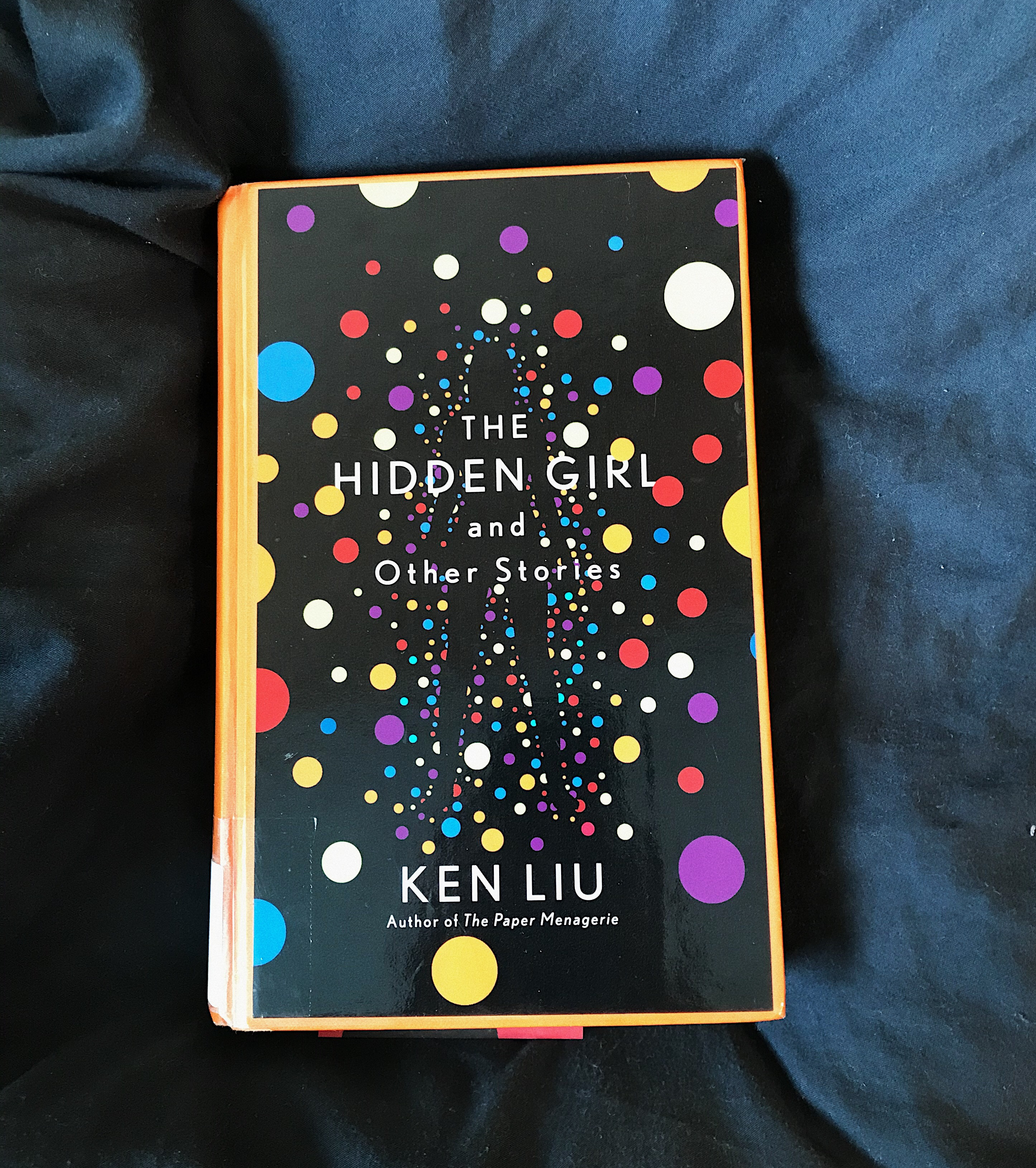
The Hidden Girl and Other Stories by Ken Liu | Book Review

Pages: 411

Genre: short stories, fantasy, sci-fi

My thoughts

Four out of five stars overall.

I loved The Paper Menagerie and Other Stories by Ken Liu which was the first I’d read of the author, which is kind of unusual as he’s most known for his long fantasy and sci-fi works like “The Dandelion Dynasty”.

The real pearl of this collection for me was “Byzantine Empathy”, which I will find myself rereading and thinking about for a while. It follows two different people, one working for humanitarian organization and one creating a VR experience where you can upload for example a scene of being in the middle of the most violent war. It’s idealism set up against pragmatism, led by really interesting morally gray characters. The choice of making the opposing sides understand each other, as previous college friends, yet not steering away from creating villains – it was just great. They do set up very interesting arguments, which is why I attached a page from the book below. The story showcases a power struggle both in politics and social media; it’s PR and image, people experiencing mass graves on their own body and looking into how human empathy could work both for and against a group of people trying to create change.

from the short story “Byzantine Empathy”

I found that in this collection, the short stories were very hit or miss for me; some I found immense insight and new thoughts and perspectives in, while others went straight past my head and left me wondering if I’d missed the point or if they were just unoriginal. And I guess that makes sense considering how this collection is more focused on the combination of the new digital age ahead of us as well as the asian (mainly chinese-inspired) cultural elements and perspective. You will have concepts that’s over-done. I’ve seen reviews bash the “easier” stories like the one of online bullying, but I disagree there because I think Liu more often than not writes the easier concepts really well, and in that way has something to add. “Thoughts and Prayers” is one of those, with the idea of uploading every single photo and clip of a loved one to the Internet, to create a virtual version of them (in this case to use as an example of the horrifying reality of mass shootings). It is a terrible idea in reality because of how human beings have shown to behave, no debate there. Drawing much inspiration from the real world, where american survivors of school shootings has spoken for gun control and been the subjects of massive harassment and conspiracy theories, it looks into how you can completely screw with the memories a human has of a dead loved one. Humans has real weaknesses in how much we can handle. And the story is not so far-fetched as deep-fakes are becoming a very real thing. Revenge fake porn sounds fucking awful.

The pessimism hit me like a wave half-way into the book. Like I truly didn’t see it coming as you think one short story stops with the questions unanswered, only for it to be a red thread taken up later in another one. And it didn’t always end that well, did it. For the collection overall, I loved this kind of composition. It’s enough of the same universe or storyline to be able to delve into deeper topics of artificial intellingence and VR and how humans can use technology in ways ranging from imperfect to directly devastating. I described it to a friend as “1001 clever shortcuts to dystopia ft. nostalgia”, which was what it was for a while. But it also gives space for the more out there one-off fantasy stories.

The mix of types of stories, mainly the fantasy among the sci-fi, can also be interpreted as making the collection not quite as put together as well. Messy, if you’d like. It could be that it should have stayed to the sci-fi side and discarded some fantasy stories. Best example of this is how I found the short story of “Hidden Girl” interesting, but flat and not very special. I don’t get why the book is called that. I liked the chinese mythology behind it, but it was one of the rarer cases where I would’ve liked a longer story to be able to fulfill the potential of the setup of the cast of characters. It surely feels like the beginning of an abandoned long-form project and not a short story like the others.

Favourite short stories; “The Gods Will Not be Chained”, but also the rest of that story with “The Gods Will Not Be Slain” and “The Gods Have Not Died In Vain”. It starts with a girl trying to find out the circumstances of her dad’s death and ends in AI war, where the artificial intelligence was created by people finding out the method of uploading their knowledge and consciousness and becoming like gods and a new type of human that is born and lives solely in the digital space. “Staying Behind” is similiar in that it goes into this digital space, this Singularity in which most people has chosen over the currently-real world, with enough originality to really draw me in. Then comes “Altogether Elsewhere, Vast Herds of Reindeer” going even deeper and further into the future, with a mother seeing her daughter a couple days over the course of her life as she travels in space and time. It’s obvious that there’s certain venues Liu has put a lot of time into researching and reflecting over, and those are the ones I think that really stand out and is worth reading this for.

Another excellent one was “Staying Behind”, which really made me think about religion for some reason and the idea that someone you love can lose credibility the moment they get indoctrinated into an ideology, where you never know if they’ve really found the one perfect and real thing or if they’ve lost themselves enough to be too far gone. It’s the idea behind people we love becoming monsters or zombies as well I guess, only with the additional uncertainty that they might be the ones in the right and not you.

“This wasn’t my mother speaking. The real Mom knew that what really mattered in life was the authenticity of this messy existence, the constant yearning for closeness to another despite imperfect understanding, the pain and suffering of our flesh. […] It is this world, the world we were meant to live in, that anchors us and demands our presence, not the imagined landscape of a computed illusion. This was a simulacrum of her, a recording of propaganda, a temptation into nihilism.”

from “Staying Behind” by Ken Liu