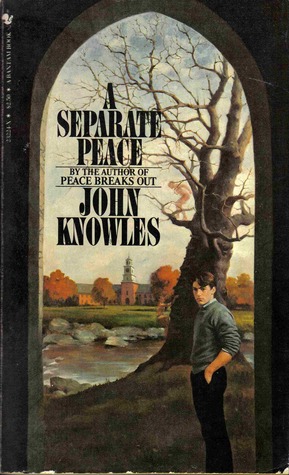
A Separate Peace by John Knowles | Book Review

Pages: 208

Genre: young adult, classic, dark academia aesthetic, historical setting

Synopsis

A timeless coming-of-age book set in the summer at the beginning of the second world war. The all-boys boarding school in New England becomes a rare place that has not yet lost its charm and innocence to violence. Friends and rivals is sometimes the same as we follow the protagonist Gene, a introverted intellectual, and the school’s star athlete Phineas, who also has the ability to talk himself out of any trouble. And trouble they find themselves in as Phineas is somewhat of a spontaneous risk-taker and Gene can’t seem to keep from following him, developing quite a strange bond. The events of the summer and the war eventually makes this period of time life-changing for Gene, that divide in anyone’s life where there’s a before and an after.
My thoughts

Rating out of five: four stars

This book gets a lot of shit because americans seems to be forced to read it too often in high school. But if you, like me, pick it up on your own, it’s quite obvious why it’s gotten its place as a classic.

Two things this book highlights exceptionally well; the setting of the external world at various times affecting or not affecting the remote world of the book, here the boarding school, as well as the unusual relationship between the two boys Gene and Phineas as they grow up side by side.

The knowledge of the outside world and the war brewing is something that constantly comes in drips through the story. That is, until the war breaks out and the cast of characters somehow intentionally try to downplay it in their heads until they finally are no longer able to ignore the reality in front of them. I read this book at the start of covid-19 becoming a pandemic, which was a somewhat ironic backdrop with its similar aspects despite the difference of how accessible news and media is today.

I was suprised by how queer the story felt, as a classic. A lot of searching after finishing the book lead me to the author being asked about and then rejecting any intentional homosexual themes. But I mean – obviously others had the same read of the situation. It’s interesting when the obsessiveness of the male and masculine goes so far to one side that it reads as queer. At points as they grow up the relationship between Gene and Phineas feels like those really destructive friendships that behave like romances, but the teens does not yet know how to pinpoint those big feelings or if they are gay. Spoken as a queer person. It could be interpreted as obsessiveness of other reasons, say jealousy, but it certainly is romantization going on in how Gene describes Finny. It fits with the (lately heavily criticized) dark academia concept because of that obsessiveness attached to the secluded group dynamic the boarding school brings.

Whether you want to call the relationship homoerotic or obsessive romantization for other reasons, it’s obvious the setting of the novel doesn’t permit such a relationship, as it gets its fitting ending.
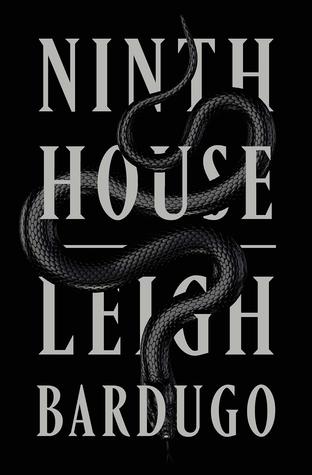
Ninth House by Leigh Bardugo | Book Review

Genre: fantasy, dark academia (debatable)

Pages: 459

This book pissed me off; I wanted to like it, but its faults are so enormous. I DNF’ed it 60% in, should’ve been much earlier, but I had hopes considering the author.

Rating out of five: one star

I love dark academia, I love books with “darker” or morally gray protagonists, I’m even a fan of messy and disorganized plots. This book is too shallow to be able to drown someone in it, though a drowning was certainly in the plot. You cannot just give your characters all this past and current, very explicit, trauma and then not play out the consequences in any shape or form. It is not the shortcut to “darker” or more “mature” content that this book was so heavily marketed as, it only brings up questions of what is for shock factor.

Here’s an actual list of all the trigger warnings for this book, but just a few; sexual assault, rape (including of a child), racism, discussed suicide.

It’s a girlboss-gatekeep-gaslight type of book, even if it starts pretty catchy and held my interest for a while. Bardugo has gone to Yale, where it takes place, and brings a lot of realistic components. Among all the upper-class students (future world-leaders) and their secret-society magic, the characters sometimes briefly dips their toes into the societal discussions it seems this book wants to have as its themes.

Meaning you get characters around the MC Alex superficially talking/having one-liners about feminism, poverty, privilege, homelessness, sexism and drug-use. And Alex herself is supposed to come from a very poor background, but only carries that with her when convenient plot-line-wise. Otherwise she seems pretty middle-class, as it’s the only group Bardugo explicitly highlights to be hard-workers. There is actually nothing good connected to any poor characters, although Alex has her moments of «even the drug dealer didn’t deserve to be murdered». The poor people are sell-outs, they’re drug-dealers, murderers, something to leave behind. That could’ve been parts of her trauma, but it’s never brought-up or discussed as such.

Now. I’m going to write this as quickly as possible, because I do not want to think about it anymore. Here’s where I stopped reading; the MC’s Alex’s friend is sexual assaulted while on magical drugs (in which she seems to give consent on camera, but is drugged in an non-noticeable way bc magic) and the pay-back is Alex getting the confession with magic and then making the guy responsible eat shit, literally. Up ’til that point there was some uncomfortable casual racist comments and thoughts from the other MC towards Alex, which is never brought up in any other shape. Of course you can have racist characters, it’s just a bit (very) weird when it’s never pointed out by anyone. Alex herself is also sexually assaulted as a kid by some magical creature (ghost? demon?), making her act out in all kinds of ways – but this also was written very out of the blue and explicitly. Also it’s very heavily emphasised that she was a kid, same day as she got her first period. It felt very wrong in how it was written. I don’t even want to quote it.

Obviously, it’s difficult criticizing how authors writes (or not writes) anything to do with sexual assault. This is personal feelings only. But I can definitely say there’s lack of depth all over this novel. All together it gives the book a big fucking no from me.

Bardugo tried to go in many directions in this book. It’s a murder mystery, it’s magical societies, it’s supposedly dark academia even though it hits so few of the characteristics other than being placed at Yale with next-to-none of the school part of it. I’ve wondered where it went wrong, because the author managed the balance of depth and action in Six of Crows, but honestly it’s too un-redeemable for me to care. There’s so much better secret-society dark academia, even with magic, out there to find. For the most part, I can’t understand why so many people love this book except for it drawing in a YA crowd that has never read anything “darker” and finds it exciting, ignoring anything bad or horrible. Like it genuinely confuses me. I wanted to like it too, but there was too many warning flags showing up throughout the 60% I read.

Poetry: mary oliver, addonizio, lambert | Short reviews

Shame is an ocean I swim across by Mary Lambert: contains very powerful stories by someone who is a musician as well, the writing flows very well. Talks about sexual assault, mental health and fame. Very good phrasing and descriptions of situations I can relate to as well, not that that’s a requirement. The excellence of titles like “It is time to eat something other than pizza and tequila” mixes well with the somber topics. Four out of five stars. Definitely check the trigger warnings.

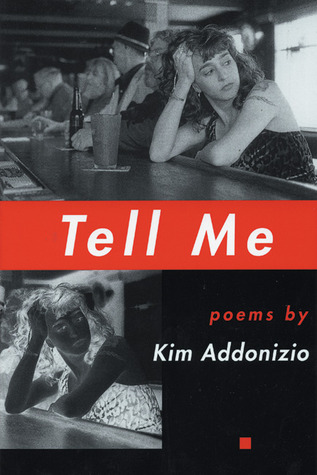
Tell me by Kim Addonizio: it took me some time to both understand the poet and the work, but it grew on me the second and third time I read it. Each poem is very hit or miss for me in how interesting I find it but overall obvious that Addonizio is a good writer. It’s feministic in how it shows someone moving unrelentless through the world, while not shying away from gritty parts. Just that level of honesty Addonizio brings creates such a depth that I can’t blame her too hard when she finds it lacking in her poetry students. Very little pretentiousness to find here, very much confessional and communicating directly to the reader. Four out of five stars, I think I’ll take a dive into her other work soon.

Why I wake early by Mary Oliver: I continue to find a lot of comfort and beautiful parts in Mary Oliver’s writing, even if this one wasn’t a personal favourite. In general, her poems are all about understanding humans through nature (as in the actual spending time in nature), in various ways. Usually with a bit more variety than here. Fav. poems is “The Arrowhead”; “The Snow Cricket” and “Where Does the Dance Begin, Where Does It End?”. Three our of five stars.

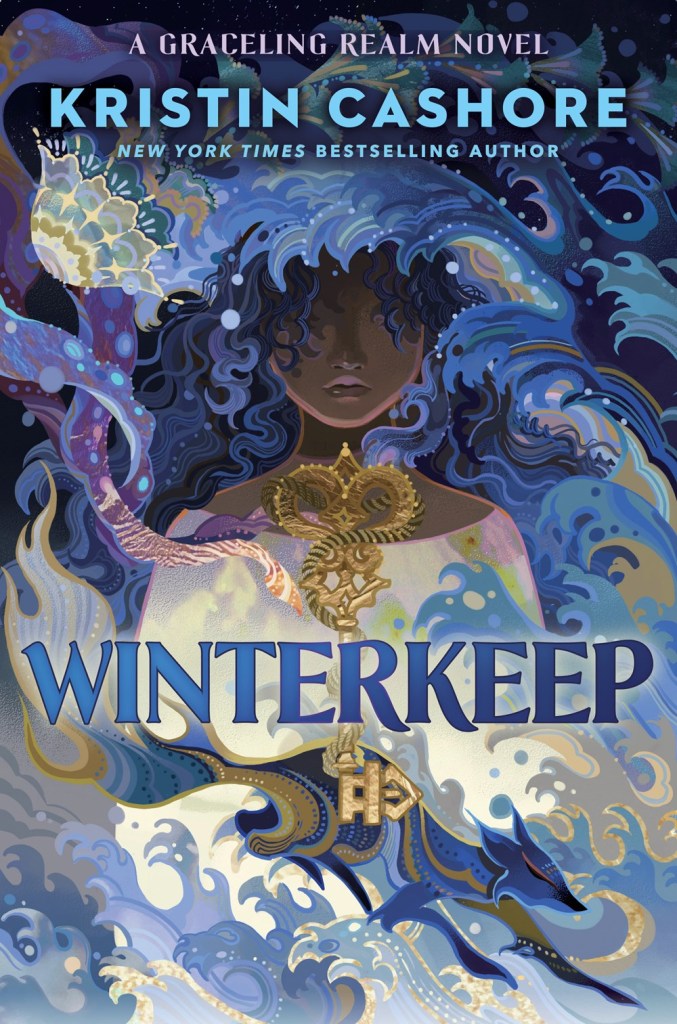
Winterkeep (Graceling #4) by Kristin Cashore | Book Review

Genre: (adult) fantasy

Pages: 528

I would look up trigger warnings before reading it! While I loved the book, I nearly had to stop because I expected a lighter type of fantasy, but even if it’s always taken up serious subjects, it suddenly got a lot darker and more in-depth. Among other things very explicit child abuse and gaslighting, also against one of the protagonists. As well as suicidality, animal abuse, etc. LIke there’s been sadists since the first graceling book, but it feels much more explicit here, probably because it’s more applicable to real-life.

Synopsis

Four years after Bitterblue left off, a new land has been discovered to the east: Torla; and the closest nation to Monsea is Winterkeep. Winterkeep is a land of miracles, a democratic republic run by people who like each other, where people speak to telepathic sea creatures, adopt telepathic foxes as pets, and fly across the sky in ships attached to balloons.

But when Bitterblue’s envoys to Winterkeep drown under suspicious circumstances, she and Giddon and her half sister, Hava, set off to discover the truth–putting both Bitterblue’s life and Giddon’s heart to the test when Bitterbue is kidnapped. Giddon believes she has drowned, leaving him and Hava to solve the mystery of what’s wrong in Winterkeep.

Lovisa Cavenda is the teenage daughter of a powerful Scholar and Industrialist (the opposing governing parties) with a fire inside her that is always hungry, always just nearly about to make something happen. She is the key to everything, but only if she can figure out what’s going on before anyone else, and only if she’s willing to transcend the person she’s been all her life.

My thoughts

Ever wondered what happens after the good protagonist becomes king/queen of the kingdom and wants to turn it into a democracy? Here, a familiar history of corruption, burning of scientific knowledge and other countries’ secret exploitation of their resources creates difficulties.

You could absolutely read this book as a stand-alone, even though it’s a very late (like nine years late) fourth book in a series I loved as a kid. While the rest of the series is young adult, it seems to have grown with its audience very deliberately and the themes and actions of characters in this book is very much adult.

Some day I need to write a review of the original trilogy, but just know that I loved it with all my heart. The first book features a kick-ass character named Katsa that’s trying to get out a life being used as an assassin just because she’s skilled/graced with it. And this book is a continuation of that in two ways.

It’s the same kind of simple, yet well-done world as before. The parts of the world have expanded, and I love the intelligent foxes and telepathic sea creatures here. Mainly the fantasy aspect is certain characters being gifted with one skill (called grace), visible by different colours on each eye. The second thing that’s stayed the same is the fierceness in the protagnosists, even though Cashore has developed in what ways a character can be strong and weak. It’s no longer just survival; it’s politics, finding strength in overcoming trauma, being intelligent and compassionate. There’s power in continuing to care for people, even after other’s have failed you. This book’s plot reads very much like a mystery, with the different POVs helping to create puzzle pieces that fit so perfectly together, yet still surprises you.

I loved the kraken-like (The Keeper) creature’s POV so much and would’ve liked its part to be bigger, though I get how that would work against the essence of its character. I felt like this book had a lof of different elements to love and that’s stuck in my mind since I read it. For instance, Lovisa has to take cover far into the country-side, where she really comes to terms with what her goals are after being through so much crisis and trauma. Along with the usual action, which there is a lot of, the book highlights the more tedious, but real-life consequences of continuing living a life. Even reading Lovisa’s inner voice is painful as she’s constantly discrediting herself, but so very real.

My absolutely favourite character was the fox Adventure – I don’t get how people dislike him. I mean his constant thoughts alone brings great relatable humor;

The fox had never before experienced the level of anxiety he’d been experiencing lately. It was too much. He could not keep everyone safe all by himself! And his siblings, all of whom were present at this party, were as useless as ever.

Somehow I think this became the book where I realized there’s worth for me in following trigger warnings, because it has a very explicit scene of Lovisa as an older daughter being threatened with her younger brothers’ suffering by the hands of her parents. Somehow, that was what got me and I just sobbed the rest of the book to be honest. But I reread those parts the next day and it’s really well done, in many ways. It’s in accord with the abusive behaviour of her parents until that point, the illusion in Lovisa’s mind of them having been good to her at times is completely destroyed, making their downfall a lot more satisfying.

What I felt reading this book: Excited about the mystery-feeling of the plot, well-written characters and the added dimension of the politics. Sobbed a lot. Appreciated the relief the non-human characters brought.

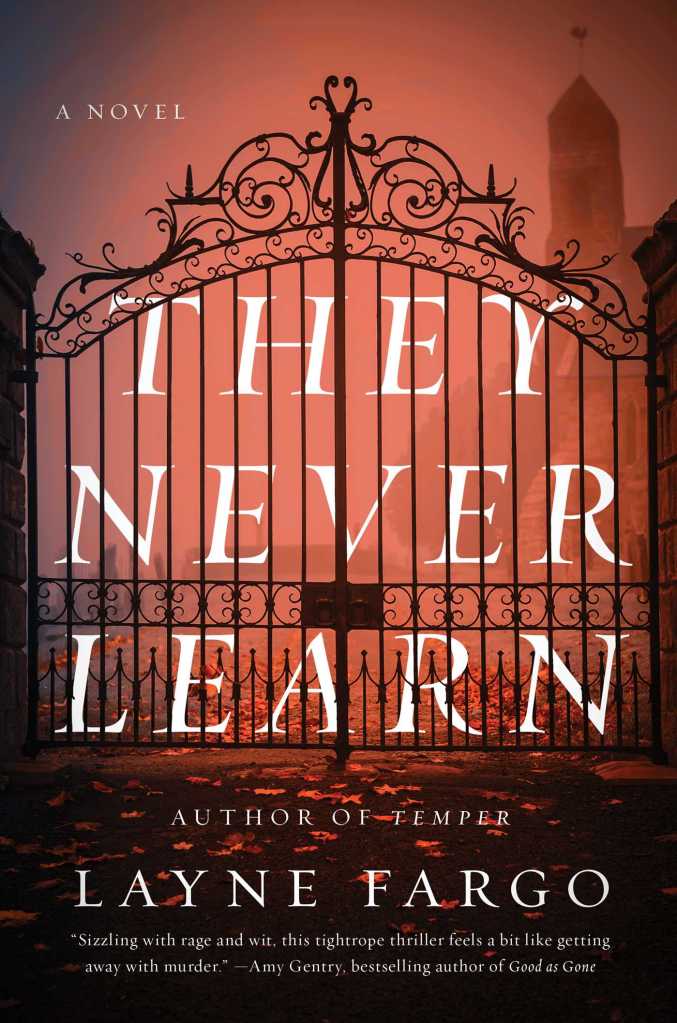
They Never Learn by Layne Fargo | Book Review

Look up trigger warnings! There’s a lot around sexual assault and abuse of power.

Genre: thriller, serial killer, dark academia, lgbt; f/f relationships, queer women, two bisexual female protagonists

Pages: 378

Synopsis

Scarlett Clark is an exceptional English professor. But she’s even better at getting away with murder.

Every year, she searches for the worst man at Gorman University and plots his well-deserved demise. Thanks to her meticulous planning, she’s avoided drawing attention to herself—but as she’s preparing for her biggest kill yet, the school starts probing into the growing body count on campus. Determined to keep her enemies close, Scarlett insinuates herself into the investigation and charms the woman in charge, Dr. Mina Pierce. Everything’s going according to her master plan… until she loses control with her latest victim, putting her secret life at risk of exposure.

Meanwhile, Gorman student Carly Schiller is just trying to survive her freshman year. Finally free of her emotionally abusive father, all Carly wants is to focus on her studies and fade into the background. Her new roommate has other ideas. Allison Hadley is cool and confident—everything Carly wishes she could be—and the two girls quickly form an intense friendship. So when Allison is sexually assaulted at a party, Carly becomes obsessed with making the attacker pay… and turning her fantasies about revenge into a reality. 

My thoughts

Sometimes I feel the books with a really interesting plot/synopsis that feels targeted at me, is the ones that let me down the most. It’s got a very good goodreads rating too. I just couldn’t get over how much I didn’t like the writing, as in the language used being cringy and constantly taking me out of the story. There’s two f/f queer friendship (both POVs are bisexual women) that turn sexual at certain points, both ending up very different. It’s all very intense and dramatic, yet it fits into the story. And there’s enough twists to the characters and the plotlines that I did enjoy reading it, even if it was built on somewhat one-dimensional characters.

I first blamed it on the fact that writing a serial killer is difficult, and it still could be, but it’s the same problem with the student Carly. Because in many ways she’s supposed to showcase the start of a girl turning cold and ruthless by the experiences and total lack of support in the systems, like being ridiculed by school administration when trying to help her friend after a sexual assault. It was a nice comparison, even if it was laid on a bit thick with even the professor Scarlett pointing out how she saw a young version of herself.

I have to state that there’s nothing wrong with these “unlikable” female main characters that made me dislike the book, as I often prefer them. In general, the author seems to be known for writing those well. I also want to say I whole-heartedly disagree with some other bad reviews claim that all the rapists weren’t equally bad and so on, it’s showcased all the way why the serial killer chooses her victims and the actions they’ve committed. I had to stop reading those reviews quick to not get sick, as they excuse sexual abuse so blatantly. It’s not meant to be feministic in how you should cheer on a serial killer, that’s up to the reader, but in showing how a culture of abuse and sexual assaults can be protected against those who want to report it. And that’s not far-fetched at all in today’s society, even if it shouldn’t have to defend itself as fiction.

Is it dark academia? Absolutely, it’s a look into a professor/murderer’s mind set on an university campus, trying to avoid persecution. The student’s POV even shows how her experiences and obsessiveness with helping her friend and keeping up with writing leads her into a darker path than she could imagine. It definitely showcases the potentially worst sides of an (academic) institution with abuse of power from everyone in charge.

The More or Less Definitive Guide to Self-Care: from A to Z by Anna Borges

Pages: 240

Genre: nonfiction; self-help, mental health

My thoughts

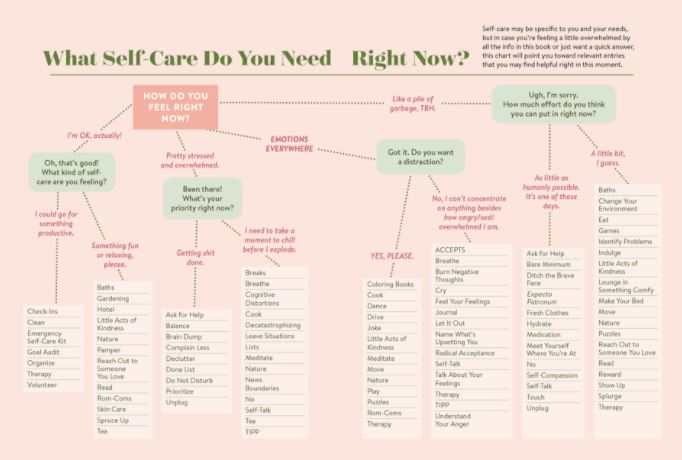
This book is written as a A to Z list of going through definitions connected to self-care and what they mean to the author.

This format has both good and bad sides; it makes the reading experience a good mix of lighter and more serious subjects, as well as more practical tips and more abstract thoughts concerning the definition and how we think of it. Because I already know and love Anna Borges writing and she does not shy away from talking honestly about mental health and suicidal thoughts. She also writes for online sites, prev. buzzfeed, and the book seems very influenced by that in how it is very much for right-now (with concrete tips like using meditation apps) and I don’t think the book will age that well necessarily. But it does help giving the tips something concrete actions behind them. It’s very much a product of the age of social media in general, but so is the word self-care, if not the concept behind it as is discussed. I think I both wanted and expected a bit more in-depth, but because of the good writing and more extensive thoughts behind each concept, it works even if it’s simple.

I would recommend this both as a starter book to the concept of self-care or one to pick up when you’re feeling low and need a reminder or inspiration, like I did. Overall it’s obvious the intention of the book is not to sell you something, but to ask you to take care of yourself and giving you some reminders around what could work for you.

Reminders I will take from it; Make a damn dentist appointment not because I yet have to, but because you should take care of your health out of self-respect. Take care of & grow my curiosity. Let yourself just be and think less of making a narrative or explanation out of the chaos that can be daily-life. Don’t let anyone fuck with you is self-care. Boundaries are important; time, values, mood, emotional well-being, comfort and safety all. Get a snake plant for better air quality. Create times for just being quiet, even if I’m not going to immediately want to meditate each day.

Self-care is the simple act of listening to my body and responding appropriately, even if it’s not the norm. It’s reminding myself that days off and times of rest are not a luxury, they are an absolute necessity.

The More or Less Definitive Guide to Self-Care: from A to Z by Anna Borges

The Hidden Girl and Other Stories by Ken Liu | Book Review

Pages: 411

Genre: short stories, fantasy, sci-fi

My thoughts

Four out of five stars overall.

I loved The Paper Menagerie and Other Stories by Ken Liu which was the first I’d read of the author, which is kind of unusual as he’s most known for his long fantasy and sci-fi works like “The Dandelion Dynasty”.

The real pearl of this collection for me was “Byzantine Empathy”, which I will find myself rereading and thinking about for a while. It follows two different people, one working for humanitarian organization and one creating a VR experience where you can upload for example a scene of being in the middle of the most violent war. It’s idealism set up against pragmatism, led by really interesting morally gray characters. The choice of making the opposing sides understand each other, as previous college friends, yet not steering away from creating villains – it was just great. They do set up very interesting arguments, which is why I attached a page from the book below. The story showcases a power struggle both in politics and social media; it’s PR and image, people experiencing mass graves on their own body and looking into how human empathy could work both for and against a group of people trying to create change.

from the short story “Byzantine Empathy”

I found that in this collection, the short stories were very hit or miss for me; some I found immense insight and new thoughts and perspectives in, while others went straight past my head and left me wondering if I’d missed the point or if they were just unoriginal. And I guess that makes sense considering how this collection is more focused on the combination of the new digital age ahead of us as well as the asian (mainly chinese-inspired) cultural elements and perspective. You will have concepts that’s over-done. I’ve seen reviews bash the “easier” stories like the one of online bullying, but I disagree there because I think Liu more often than not writes the easier concepts really well, and in that way has something to add. “Thoughts and Prayers” is one of those, with the idea of uploading every single photo and clip of a loved one to the Internet, to create a virtual version of them (in this case to use as an example of the horrifying reality of mass shootings). It is a terrible idea in reality because of how human beings have shown to behave, no debate there. Drawing much inspiration from the real world, where american survivors of school shootings has spoken for gun control and been the subjects of massive harassment and conspiracy theories, it looks into how you can completely screw with the memories a human has of a dead loved one. Humans has real weaknesses in how much we can handle. And the story is not so far-fetched as deep-fakes are becoming a very real thing. Revenge fake porn sounds fucking awful.

The pessimism hit me like a wave half-way into the book. Like I truly didn’t see it coming as you think one short story stops with the questions unanswered, only for it to be a red thread taken up later in another one. And it didn’t always end that well, did it. For the collection overall, I loved this kind of composition. It’s enough of the same universe or storyline to be able to delve into deeper topics of artificial intellingence and VR and how humans can use technology in ways ranging from imperfect to directly devastating. I described it to a friend as “1001 clever shortcuts to dystopia ft. nostalgia”, which was what it was for a while. But it also gives space for the more out there one-off fantasy stories.

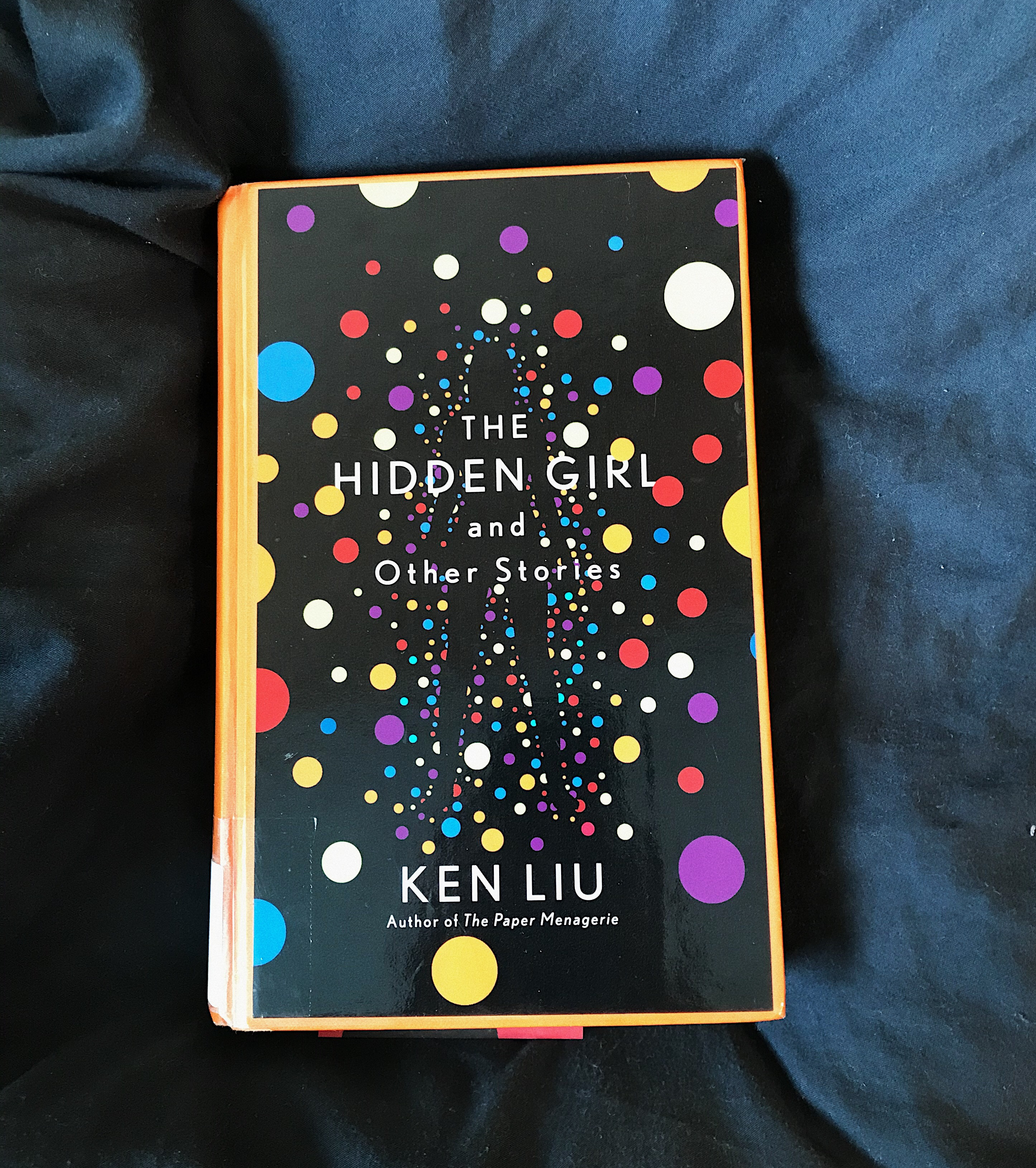
The mix of types of stories, mainly the fantasy among the sci-fi, can also be interpreted as making the collection not quite as put together as well. Messy, if you’d like. It could be that it should have stayed to the sci-fi side and discarded some fantasy stories. Best example of this is how I found the short story of “Hidden Girl” interesting, but flat and not very special. I don’t get why the book is called that. I liked the chinese mythology behind it, but it was one of the rarer cases where I would’ve liked a longer story to be able to fulfill the potential of the setup of the cast of characters. It surely feels like the beginning of an abandoned long-form project and not a short story like the others.

Favourite short stories; “The Gods Will Not be Chained”, but also the rest of that story with “The Gods Will Not Be Slain” and “The Gods Have Not Died In Vain”. It starts with a girl trying to find out the circumstances of her dad’s death and ends in AI war, where the artificial intelligence was created by people finding out the method of uploading their knowledge and consciousness and becoming like gods and a new type of human that is born and lives solely in the digital space. “Staying Behind” is similiar in that it goes into this digital space, this Singularity in which most people has chosen over the currently-real world, with enough originality to really draw me in. Then comes “Altogether Elsewhere, Vast Herds of Reindeer” going even deeper and further into the future, with a mother seeing her daughter a couple days over the course of her life as she travels in space and time. It’s obvious that there’s certain venues Liu has put a lot of time into researching and reflecting over, and those are the ones I think that really stand out and is worth reading this for.

Another excellent one was “Staying Behind”, which really made me think about religion for some reason and the idea that someone you love can lose credibility the moment they get indoctrinated into an ideology, where you never know if they’ve really found the one perfect and real thing or if they’ve lost themselves enough to be too far gone. It’s the idea behind people we love becoming monsters or zombies as well I guess, only with the additional uncertainty that they might be the ones in the right and not you.

“This wasn’t my mother speaking. The real Mom knew that what really mattered in life was the authenticity of this messy existence, the constant yearning for closeness to another despite imperfect understanding, the pain and suffering of our flesh. […] It is this world, the world we were meant to live in, that anchors us and demands our presence, not the imagined landscape of a computed illusion. This was a simulacrum of her, a recording of propaganda, a temptation into nihilism.”

from “Staying Behind” by Ken Liu

Persephone-Hades & Lesbian Horror Story | Short Reviews

Here’s other graphic novel reviews.

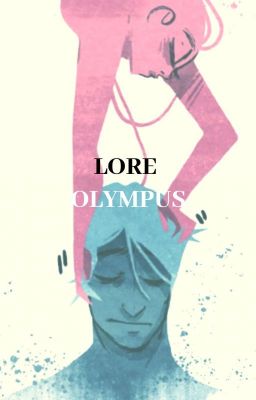
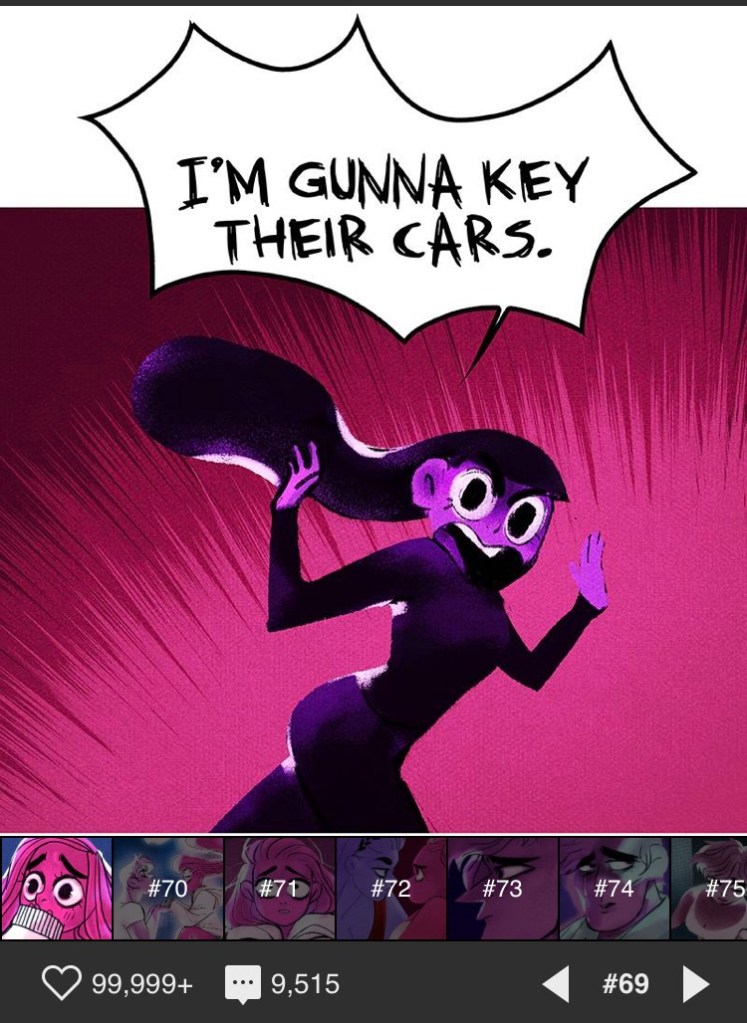
Lore Olympus s1 by Rachel Smythe

Link to the webtoon/web-comic. Funny enough the illustrations I included isn’t very representative of the style, more so the comedic elements. S1 consists of 115 episodes; absolutely worth your time if you want characters with a lot of personality, a good romance and greek gods dealing with the everyday shit in life. I was truly excited going in, less so when I realized the main focus was on Hades & Persephone as it’s a romance done so many times. It felt a bit slow and boring in the beginning. But overall the writer really managed to showcase aspects I hadn’t seen before, as well as giving Persephone a really different personality without making it too “quirky”. She’s clumsy, but smart and means well trying to prove herself and the writer did not shy away from the aspect of her being a “young” goddess, but playing into it by making it almost a college/first-job story where you need to fight for independence and then re-realize that it’s okay to need and ask for help. The office aspect of every coworker hating on her special treatment – it’s all great. It did also use the greek gods aspect to deal with heavier issues like sexual assault, with specific trigger warnings in front of every chapter that focuses on that. All in all just a great romance/rom-com/every-day type of stories, but had surprising depth as well. And the web comic format really plays into showcasing both the main and minor character’s differences and backstories. Loved it, very binge-able. Five out of five stars.

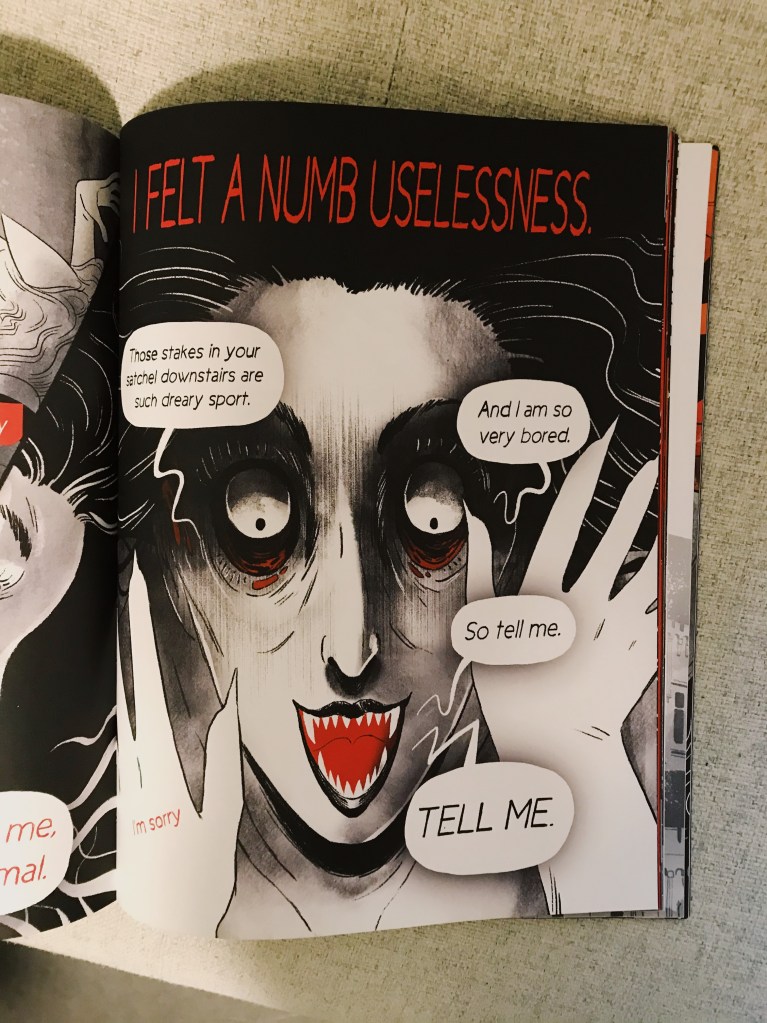
When I Arrived at the Castle by emily carroll

I really admire the illustrations of emily carroll, I mean look at it-

I’ve already read & loved Through the Woods and she also has one called Beneath the Dead Oak Tree. This graphic novel tells the somewhat lesbian of a story of a castle, a cat-girl, some fairytale sprinkled in and a very attractive femme fatale vampire countess. And not to forget the blood colouring the pages. It’s not very straight-forward, but I liked it. For some reason I expected more though? It has little of a plot and lot of vibes, which is not the right way to phrase that, but I’m sticking with it. It’s very much like a fever-dream. Three out of five stars.

Exciting New Book Releases Winter 2021

It’s another season of new books waiting in the horizon! (Let’s all work towards making this year less bad overall, shall we?)

Lore by Alexandra Bracken

Release date: January 5th 2021

Why I want to read it: Greek gods!! Also I liked this author’s books as a teen. It’s a standalone, which is a plus.

Winterkeep (Graceling Realm #4) by Kristin Cashore

Release date: January 19th 2021

Why I want to read it: Graceling is one of my all-time favourite fantasy series, especially as I grew up along with it, from 2008 to 2012, and now another new book. This magical world is built in such a way that you can just expand it and create crossovers, while retaining some of the elements. I’m just so happy about learning this book will exist.

Remote Control by Nnedi Okorafor

Release date: January 19th 2021

Why I want to read it: I’ve yet to read Akata Witch by the same author, but so many seems to like it. I’ve seen this novella described as a folktale/sci-fi story with african futurism,

How To Disappear by Savannah Brown

Release date: February 23rd 2021

Why I want to read it: I always have loved Savannah’s writing, her debut novel “The truth about keeping secrets” was stunning, as is her poetry. So I’m here for more mystery, set in an isolated community where surely the worst things could happen, in secret.

A Court of Silver and Flames by Sarah J. Maas

Release date: February 16th 2021

Why I want to read it: I don’t want to, but I feel compelled to finish what I’ve started with this series, no matter how often I give up on this author. Goddamn. Maybe I won’t and this is what breaks the cycle – I wish.

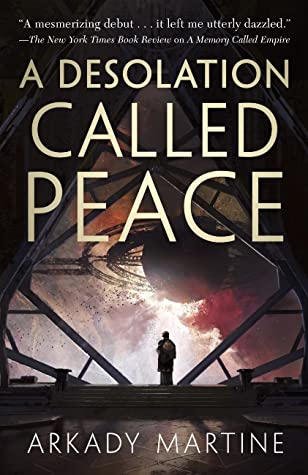
A Desolation Called Peace (Teixcalaan #2) by Arkady Martine

Release date: March 2nd 2021

Why I want to read it: I’ve yet to read the first book in this series, but the beginning of this queer sci-fi series has gotten so good reviews. I mean – Aztec empire in space??

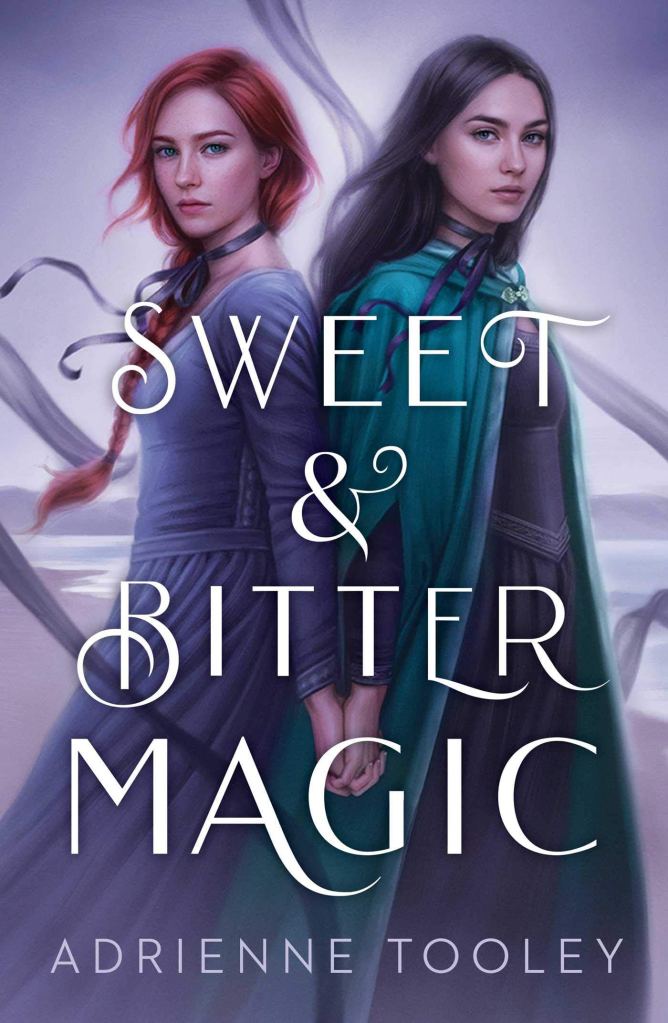
Sweet & Bitter Magic by Adrienne Tooley

Release date: March 9th 2021

Why I want to read it: honestly I’m unsure about this book, even with the stunning cover. But sapphic witches, a magical plague, dark powers and love bargains might be too good to pass on, especially if the reviews I see are positive.

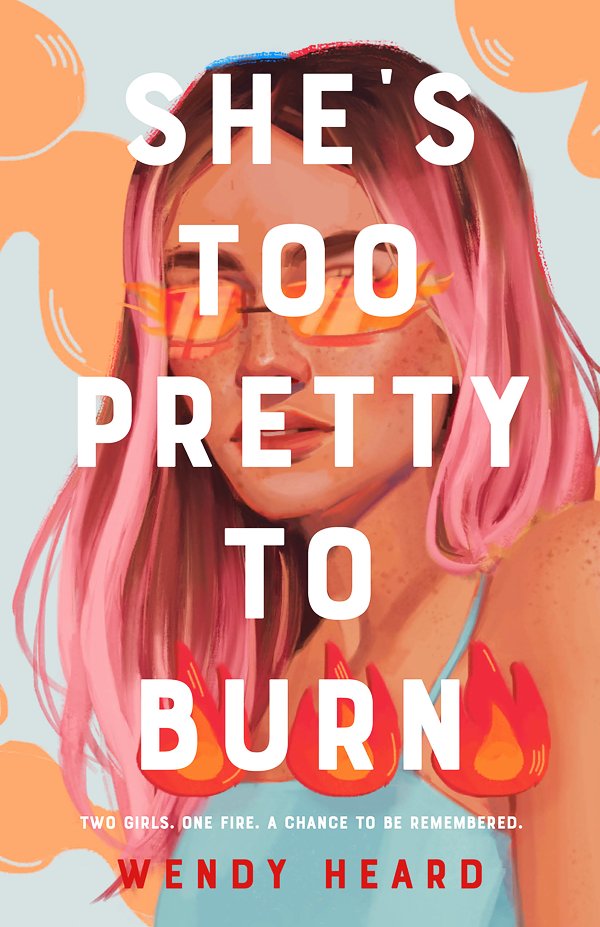
She’s Too Pretty To Burn by Wendy Heard

Release date: March 30th 2021

Why I want to read it: queer girls, a rebel art scene and claiming to be a “sexy, psychological thriller”.

Short Fantasy Reviews: queens, heists & folklore

Spoiler-alert; they were all kind of let downs in different ways.

The Shadows Between Us by Tricia Levenseller

I was promised a “cunning, villainous queen” who wanted to take the reign from the king with magical shadowy powers & secrets, even though I suspected she would fall in love with him instead. What I got was a lot of whining and unpreparedness after she’d shown considerable ambition. The writing falls into the hole of telling you how dangerous certain people are without truly following through, there seems to be little consequences. Like you might call both the main characters cold-blooded murderers, but it’s just based in a lack of reaction to murders happening around them or those they commit in some kind of self-defense. There’s very little of the expected morally-gray aspects here. Also imagine me shaking my fist at how the main character manages to get noticed by the king because she’s not a follower like all the other girls at court. It feels like a worse version of Holly Black’s ‘The Cruel Prince’ in every way, as this MC lacks a lot in comparison, like the true viciousness or skill. This book started out good, which was the reason I finished it, but in total it was a let down. Read it for the romance, I guess, but it’s pretty plain and straight forward. 2/5 stars.

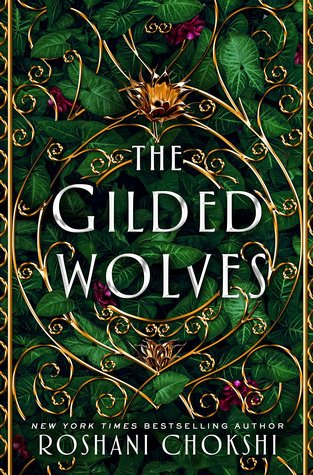
The Gilded Wolves by Roshani Chokshi

A young adult fantasy that I was excited for because of the heist, found family, dark vibes and the morally gray & diverse characters which a lot of other bloggers seems to have fallen for as I’ve seen a lot of five stars reviews. Not to forget the bisexual character & autistic scientist. Still, I DNF’ed at 32% as I tried to give it a fair chance. The first thing that didn’t match with me was simply the writing, then nothing else about the characters, plot or world-building caught my interest. It’s been three weeks since I read it and there’s nothing remarkable I remember at all unfortunately. For the record, I absolutely loved Six of Crows, which it has been compared to a lot.

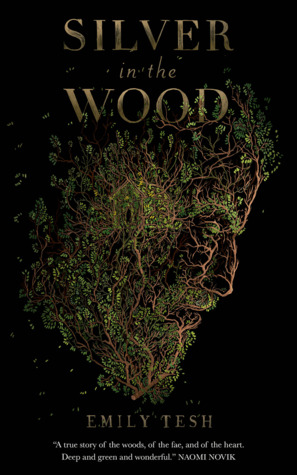
Silver in the Wood (Greenhollow Duology #1) by Emily Tesh

You ever have those books that you enjoyed the experience of reading, but looking back it wasn’t all that much? I feel so mixed about this book, because I liked the cottagecore aesthetic of the Wild Man of Greenhollow and the secret-folklorist that comes upon him. In 112 pages this novella manages to deliver on the fairytale-ish forest, magical realism vibes in the writing, but plot-wise, character-wise, etc. it does come up short to me. The m/m relationship and yearning could’ve been so much better than it was. I don’t quite understand the idea of giving out a second novella either, instead of having used that time setting up the story to fulfill its potential. It seems strange. Definitely an interesting debut author to watch, but I think I’ll pass on that sequel for now. 2/5 stars.