The Art of Heikala | Book Review

Pages: 152

Genre: nonfiction – art

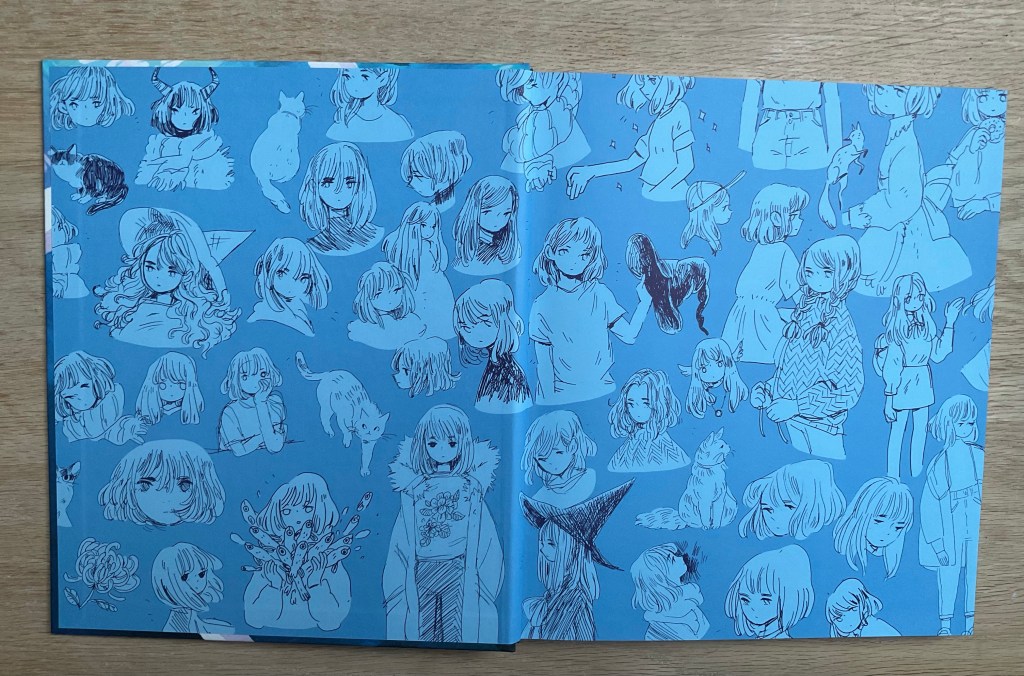
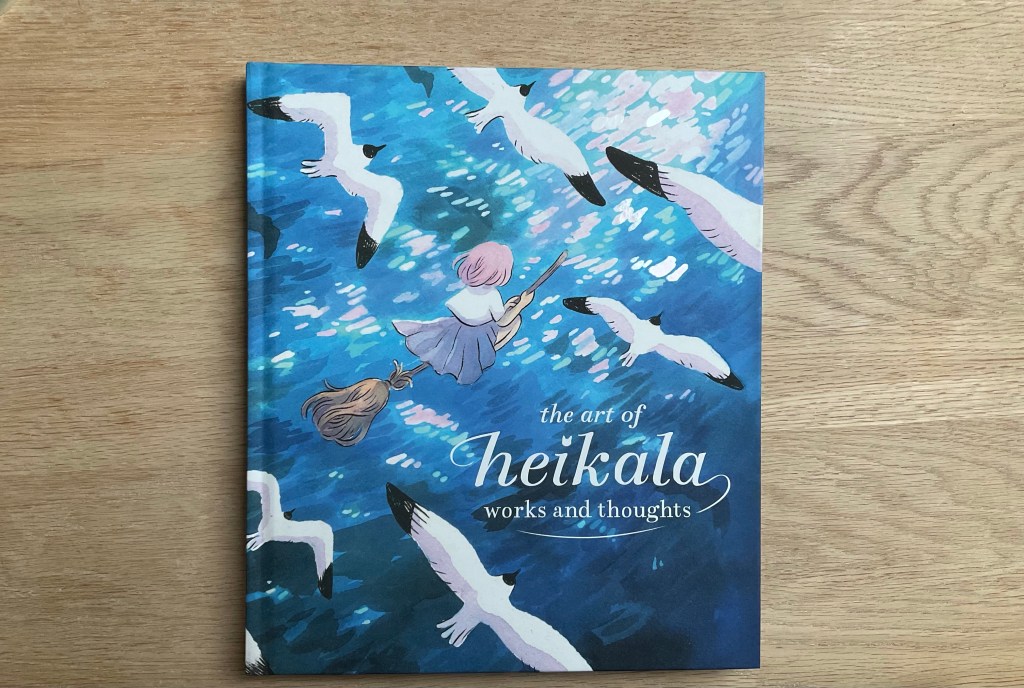
Heikala is a finnish artist drawing a lot of inspiration from both Finnish illustrations and Japanese animation in their artwork. I first noticed her because of the witch and wizard cat character series she did (in 2016/2017) and fell in love with the soft nature scenes, often with a layer of magic to it.

It’s both a visually stunning book from a great artist, as well as filled with information. It talks about how heikala made her career, how she draws and the process (with tutorials), the benefits of different media and recommendations for equipment. In general, Heikala seems to know how to build a brand and market herself, as well as making great physical products like this book. Heikala has never held back on showing people the process behind her work, which has made her very visible online. She has her own shop (https://heikala.com/) which has both artwork and bundles of equipment for those who may want to start out with watercolour or ink or encourage someone else to do so. It’s very clever because I think especially watercolour is something that is looked down on from non-artist because they have “tried it” either as kids or adults, and might have liked it better if they did not have really bad paint and equipment. I don’t paint a lot myself, but I have tried quality watercolour and it makes a difference. When I do paint I prefer gouache which might be an odd choice for a beginner, but I find it more forgiving than watercolour while giving a similar look, which I love.

It’s both a really inspiring book which fits both artists and non-artists, and filled with great art pieces and works in progress.

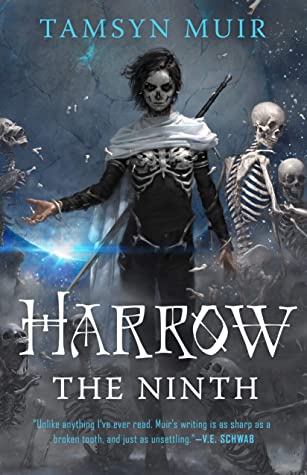
Harrow the Ninth (The Locked Tomb #2) by Tamsyn Muir

Pages: 510

Genre: fantasy, sci-fi, queer characters

Synopsis

She answered the Emperor’s call. She arrived with her arts, her wits, and her only friend. In victory, her world has turned to ash.

After rocking the cosmos with her deathly debut, Tamsyn Muir continues the story of the penumbral Ninth House in Harrow the Ninth, a mind-twisting puzzle box of mystery, murder, magic, and mayhem. Nothing is as it seems in the halls of the Emperor, and the fate of the galaxy rests on one woman’s shoulders.

Harrowhark Nonagesimus, last necromancer of the Ninth House, has been drafted by her Emperor to fight an unwinnable war. Side-by-side with a detested rival, Harrow must perfect her skills and become an angel of undeath — but her health is failing, her sword makes her nauseous, and even her mind is threatening to betray her.

Sealed in the gothic gloom of the Emperor’s Mithraeum with three unfriendly teachers, hunted by the mad ghost of a murdered planet, Harrow must confront two unwelcome questions: is somebody trying to kill her? And if they succeeded, would the universe be better off?

My thoughts

Rating out of five: two stars

This might be the first book in a series where I missed a bit of repetition about the world-building and where the first book left off. Because it’s a complete shift in writing style and vibe of the plot. To the point where I was both googling and reaching out to friends about whether this book was worth continuing to read. And while they thought so, because «it would be explained eventually», I would rather have stopped when I look back. What interested me most about this book was why I didn’t like it, despite trying my best.

It has a second person POV for large parts of it. I started reading it on a kindle, switched to audiobook on advice from friends, but could not stand the character voices the voice actor made. (I’m sure they’re great, it’s just a personal preference.) So I finally read most of the book in physical format and at the end the narrative choices made sense. But that doesn’t mean it was worth it. Short format, either within a novel or on its own, you can experiment a lot with narrative styles. But because of the supposedly expansive sci-fi/fantasy world, with planets and gods, the plot gets kind of muddled with the narration. It’s both an unreliable narrator, a lot of characters, multiple plans the protagonist knows little about and basically an amnesia storyline (even if magically induced). When someone dies, it’s hard to care, in what is supposed to feel like a whole big mystery. It has such good ratings, but if a younger me read this book I would just go «I’m sure it’s great and I just don’t quite get it», when in reality this is a book with a great idea of how to tell a story, but a mostly bad execution.

Some parts here and there the writing really work, but then it loses focus again in the (un)balance of getting the reader information about both the expansive storyline and the character storyline so that they could be tied together. It’s the type of book that could need more than 500 pages to explain the world, but where 500 pages is way too long already for the exhaustive narrative styles. Mainly, I think it could’ve been fixed by having Harrow not be such a big protagonist as she was.

I’m kind of tempted trying the third book, Nona the Ninth, just because of the big switch from the first to second book and the small chance the next is something else again. But I definitely lost a lot of faith in the series.
Start of 2023 TBR: fantasy, poetry and … climate change?

I post so rarely that I’m amazed people still read these posts, but thank you and please share what books you are excited for this year.

Fantasy

  • Harrow the Ninth (The Locked Tomb #2) by Tamsyn Muir. I loved the first book, I’ve been struggling to get through this one to be honest.
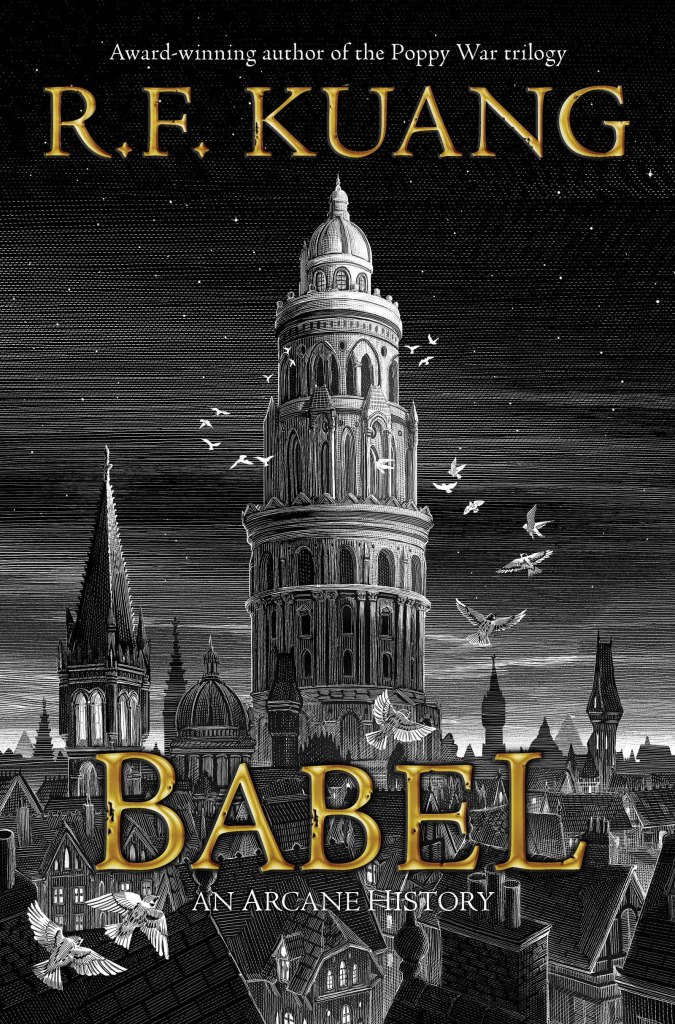
  • Babel by R. F. Kuang (also dark academia): going in pretty blind, but hoping for the best.
  • A Vampire’s Redemption (The Inquisition Trilogy #2) by Casey Wolfe (queer): the first book was great!
  • The Library of the Unwritten by A. J. Hackwith: I don’t remember who described this as a morally gray type of character doing the trope of “coming out of retirement” and returning to power, only that protagonist is also a librarian.
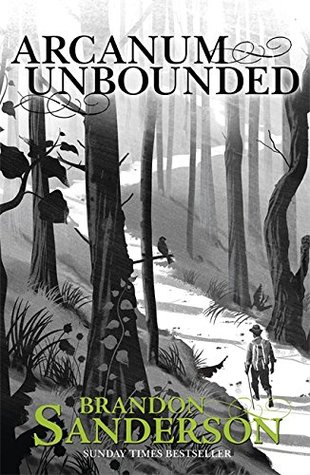
  • Arcanum Unbounded by Bradon Sanderson: a collection of Cosmere stories.
  • A Master of Djinn by P. Djèlí Clark (queer): I’ve heard so many great things about this debut fantasy set in Cairo with murder mystery and secret societies.

Poetry

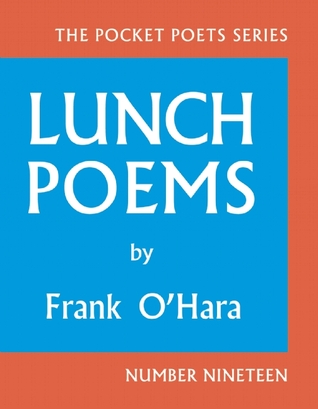
  • Lunch Poems by Frank O’Hara
  • Closer Baby Closer by Savannah Brown (released in february)
  • War of the Foxes by Richard Siken

Classics, memoirs and essays

  • Frankenstein by Mary Shelley (classic): I’ve tried getting through this book once already, I love the experience of reading it, but it’s so dense I struggle to get into it (more so than other classics even, idk why?).
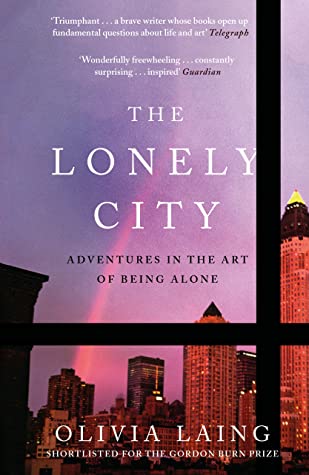
  • The Lonely City: adventures in the art of being alone by Olivia Laing (essay/memoir): I wanted to read this when moving away from university, but it’s like four years later now.
  • Tuesdays with Morrie by Mitch Albom (memoir): I do not know anything about this book, but it appeared on my tbr shelf somehow.

Nonfiction and science

  • Immun by Anne Spurkland (in norwegian)
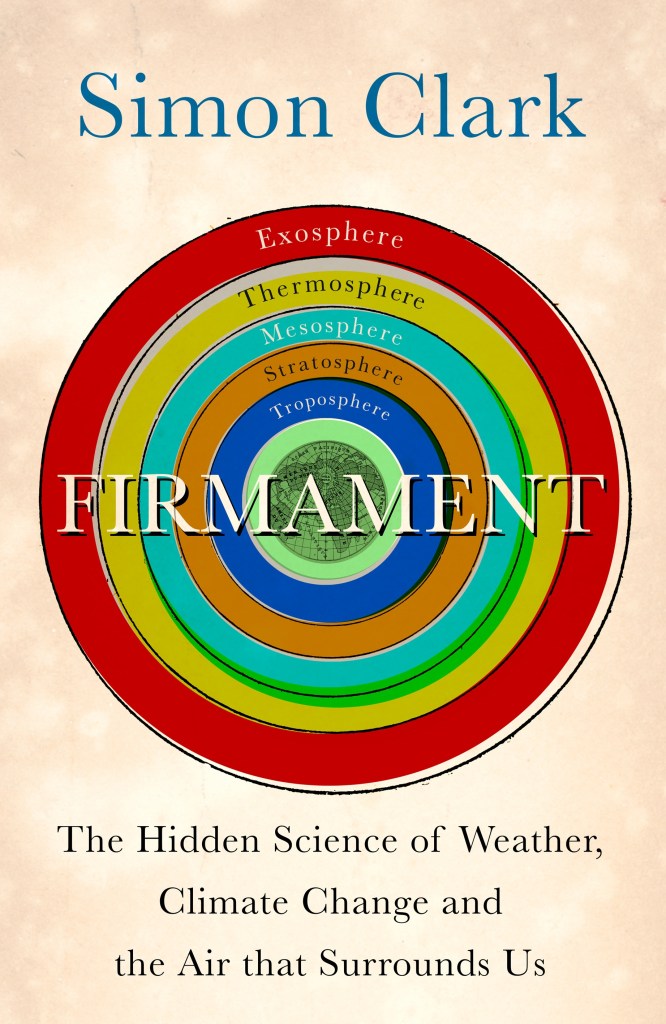
  • Firmament: the hidden science of weather, climate change and air that surrounds us by Simon Clark
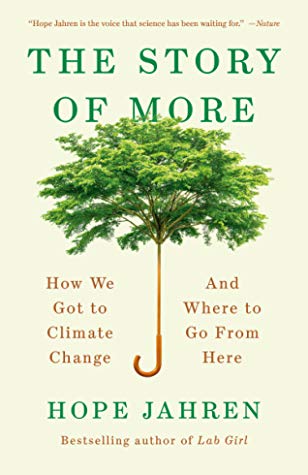
  • The Story of More: how we got to climate change and where to go from here by Hope Jahren
  • Braiding Sweetgrass by Robin Wall Kimmerer: this book keep being referenced in so many science podcasts I listen to!
  • Friends: Understanding the power of our most important relationships by Robin Dunbar

Personal project / rant

I don’t really do new year’s resolutions, but a type of personal project this year is read or watch more indigenous stories. Probably it would be mostly Sami related, as that’s the indigenous group I have closest knowledge / association with. Last year two separate things were in the national news here around the same time. The first was the question of how far climate change activists were willing to go, in terms of violence against property and/or people. The more I read of the discourse, the more I hated the existential negative parts which never pointed out successful past campaigns (like those fought by indigenous people for their local environment) or had any future strategies in mind. Because I get that climate change has gotten to the point where it is going to be bad anyway, but if you want to be an activist you should have thoughts on how you think it can be better, for your own well-being if nothing else. It hightlighted to me that the values which you base your «ideology» on matters. It’s too easy otherwise to fall into elitism, or the «the world would be better with less people in it» or, you know, eugenics.

Anyway. The other thing in the news a lot was Sami politics where there’s proof non-sami (and right-wing) people were encouraged to meddle in indigenous politics. Mostly to undermine rights and use of land or for financial gain, as far as I understood. And that also often has an enviromental side. It brought up the question of who is Sami «enough» to vote on Sami politics here, but the norwegian government has pretty well-defined requirements. And some fall outside of those, even if they would consider themselves Sami, so that is another debate. But personally I do fill every requirement to be considered part of that registry of Sami people. So I feel like it’s natural that I’ve come to a place where I want to know more.

On the science side, I’m taking atmospheric physics and climate change as a course, which has been great so far.